
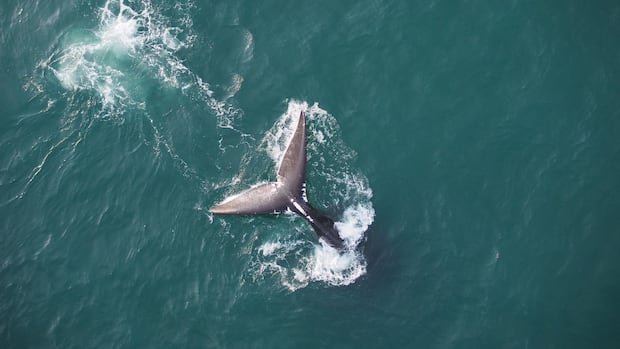
The United States is considering altering regulations aimed at safeguarding the critically endangered North Atlantic right whale from ship strikes along the East Coast. The National Oceanic and Atmospheric Administration (NOAA) of the US disclosed plans to explore potential changes leveraging modern technologies to mitigate collisions between ships and whales while addressing industry requirements.
NOAA Administrator Neil Jacobs highlighted the significance of aligning with the President’s strategy to integrate advanced technologies to bolster American industry and enhance regulatory efficiency. Seeking external input, the agency aims to streamline the regulatory framework and alleviate any unnecessary burdens stemming from speed restrictions imposed on larger vessels back in 2008.
Despite the push for technological solutions, experts caution that existing technologies are insufficient to entirely prevent whale collisions. Sean Brillant, from the Canadian Wildlife Federation, emphasized the need for further advancements in technology to enhance whale detection and collision avoidance measures.
Similarly, Moira Brown from the Canadian Whale Institute acknowledged the potential of infrared cameras on ships to detect whales but stressed the experimental phase and limited effectiveness in preventing collisions independently. While supporting the integration of new technologies alongside speed regulations, Brown expressed concerns that altering speed limits could impede conservation efforts significantly.
NOAA’s 2020 report assessing the impact of speed limits on reducing whale mortalities recommended strengthening enforcement, extending regulations to smaller vessels, and adjusting speed limits in specific areas and times. Captain Bob Peacock, with five decades of experience as a ship pilot in Maine, emphasized adherence to speed limits and effective communication as key strategies in avoiding whale collisions.
Acknowledging the importance of technology, Peacock advocated for the continued use of drones for whale spotting but emphasized the irreplaceable role of human observation and collaboration in navigating whale habitats safely. Collisions with ships have been a significant cause of North Atlantic right whale deaths, with the population dwindling due to various threats, including entanglement in fishing gear and vessel strikes.
The population of North Atlantic right whales, estimated to be less than 400, has been in decline since 2010, necessitating stringent conservation measures to ensure their survival.

