
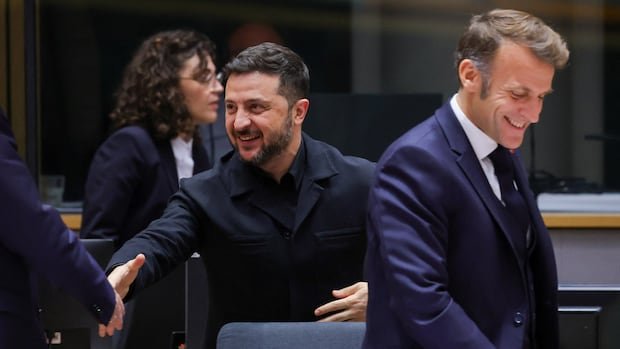
The European Union has approved a fresh set of sanctions against Russia that focus on its clandestine fleet of oil tankers and prohibit the import of liquefied natural gas. Additionally, EU leaders have backed a strategy known as Readiness 2030 to fortify Europe’s defense capabilities against external threats by the end of the decade.
The Readiness 2030 plan was crafted due to apprehensions that Russia is testing the defenses of the 27-member bloc. European leaders emphasized the urgency of addressing Russia’s aggressive actions towards Ukraine, labeling it as a significant challenge to global security.
Under the new plan devised by the European Commission, national governments are urged to progress on specific projects set to commence in the first half of 2026. One of the primary objectives is to establish drone defenses to identify, monitor, and neutralize unauthorized drones, particularly following multiple airspace violations near Europe’s borders with Russia, Belarus, and Ukraine.
This initiative, known as the European Drone Defence Initiative, will be a crucial component of a broader scheme called Eastern Flank Watch, designed to reinforce defenses along Europe’s eastern border via land, sea (Baltic and Black seas), and air, including protection against hybrid threats.
The European Commission estimates that EU defense expenditures for this year will reach approximately 392 billion euros, nearly double the amount from four years ago before Russia’s full-scale invasion of Ukraine. It anticipates that defense spending over the next decade could amount to around 3.4 trillion euros and plans to propose an increase in the EU’s long-term defense budget to support this.
The recent sanctions are part of a wider effort to cut off the financial resources sustaining Russia’s incursion into Ukraine and compel President Vladimir Putin to engage in negotiations to end the conflict. While Russian state media downplayed the effectiveness of the measures, Ukrainian President Volodymyr Zelenskyy welcomed the sanctions as a crucial step towards holding Russia accountable for its actions against his country.
Despite ongoing peace initiatives led by the U.S., the conflict shows no signs of abating after more than three years of hostilities. European leaders are increasingly wary of Russia’s threat, as Ukrainian forces continue to resist Russian incursions in a protracted conflict that has inflicted significant damage on both sides.
Energy revenues play a pivotal role in Russia’s economy, enabling Putin to fund the military without exacerbating inflation or triggering a currency crisis. The impact of economic sanctions on compelling Putin to change course remains uncertain, although Russia’s economy is displaying signs of strain.
The latest EU sanctions target Russian oil and gas sectors, the shadow fleet of aging tankers evading sanctions, and Russia’s financial industry. Additionally, a new system will be implemented to restrict the movement of Russian diplomats within the EU. Zelenskyy has urged other nations to join in imposing sanctions on Russia, signaling a united front against Moscow’s aggression.
European and U.S. officials have engaged in extensive discussions on intensifying pressure on the Kremlin. In response, the Russian Foreign Ministry criticized the sanctions as counterproductive, warning of potential adverse effects on efforts to resolve the Ukrainian conflict through diplomacy.
The approval of the new EU sanctions followed weeks of deliberation within the 27-nation bloc. While this marks the 19th set of sanctions imposed on Russia over the conflict, enforcement and compliance with these measures remain challenging. Moscow has adeptly navigated around previous sanctions, underscoring the complexities of curbing Russia’s actions through economic restrictions.

