
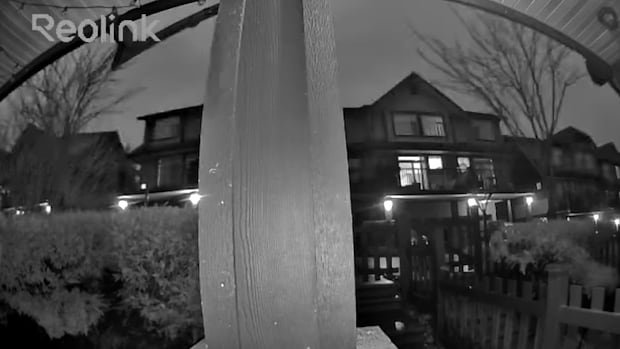
A bright flash and loud boom witnessed by residents of British Columbia on Tuesday night were caused by a meteor streaking through the earth’s atmosphere, experts have confirmed. According to Robert Lunsford from the American Meteor Society, the event was classified as a “fireball,” which denotes a meteor larger and brighter than usual, much more dazzling than the typical pea-sized meteors. Lunsford explained that even a softball-sized meteor can create a flash as bright as a full moon, meeting the fireball criteria. The rapid appearance ruled out human-made space debris, confirming the natural occurrence of the fireball likely composed of stone, metal, or a combination of both.
Johanna Wagstaffe, a meteorologist and science reporter at CBC News, indicated that the anomaly was most likely a meteor passing through the atmosphere. Seismographs registered a spike around 9:10 p.m. PT, and the sonic boom observed is a classic indicator of a meteor traversing the atmosphere. Wagstaffe highlighted the rarity of meteor sightings in western North America, emphasizing the significance of such events. She elaborated on how a sonic boom is created by the rapid compression and heating of air as an object travels through the upper atmosphere at speeds ranging from 20 to 70 kilometers per second. While the object likely disintegrated, further analysis by various groups and astronomers will provide more insights into the event.
NASA confirmed the reports of the meteor over the Pacific Northwest shortly after 9 p.m. on Tuesday, citing data from the American Meteor Society and a National Oceanic and Atmospheric Administration satellite. The meteor was observed about 98 kilometers above Coquitlam, B.C., moving slightly east of north at a speed of approximately 33 kilometers per second. It covered a distance of about 71 kilometers through the upper atmosphere before breaking apart at an altitude of roughly 65 kilometers above Greenmantle Mountain in Garibaldi Provincial Park.
Astronomy professor Brett Gladman from the University of British Columbia mentioned that the fireball was visible across a wide area, from Comox in the west to Merritt in the east and extending south to Seattle, Wash. Initial assessments suggested that the fireball resulted from the natural entry of a rocky asteroid fragment, possibly 10 to 100 centimeters in size, into the earth’s atmosphere. The meteor’s visibility was attributed to the atmosphere heating up as the rock passed through, with the accompanying boom due to the object’s supersonic speed. The descent of the fireball was estimated to be north of Coquitlam, in a densely forested, mountainous region, making any surviving fragments challenging to locate.

