
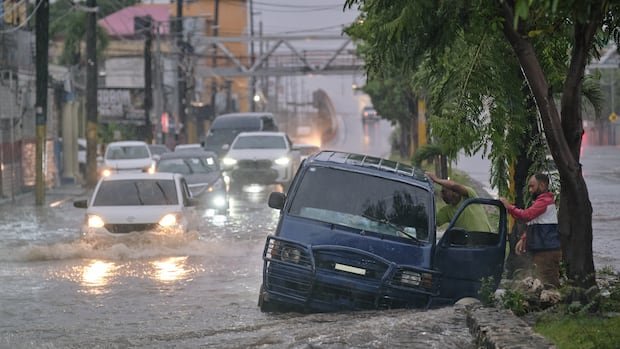
Hurricane Melissa has rapidly strengthened into a potentially devastating storm in the Caribbean, according to U.S. forecasters’ early Sunday warning. The U.S. National Hurricane Centre reported that Melissa now has maximum sustained winds of 220 km/h, reaching Category 4 status on the Saffir-Simpson wind scale.
Forecasters based in Miami stated that Melissa is expected to intensify further throughout the day and is likely to make landfall in Jamaica either Monday night or Tuesday morning. As of Saturday night, the storm was moving west at a speed of seven km/h and was situated approximately 195 kilometers southeast of Kingston, Jamaica.
A hurricane warning has been issued for Jamaica, with hurricane watches in effect for parts of Haiti’s southwestern peninsula and southeastern Cuba. The storm is forecasted to bring up to 1,000 millimeters of rain to Jamaica by Wednesday, as stated in the agency’s 5 a.m. ET update on Sunday.
Similar rainfall forecasts have been issued for southern regions of Haiti and the Dominican Republic until Sunday, with potential life-threatening flooding and landslides, especially in southwestern Haiti. Eastern Cuba is also likely to be impacted by the storm, where up to 30 centimeters of rain may fall in certain areas by early Wednesday.
The slow-moving storm has caused casualties in Haiti and the Dominican Republic, with at least three reported deaths in Haiti and one in the Dominican Republic, while one person remains missing. Jamaican authorities have advised the closure of all airports within 24 hours of a hurricane warning being issued and have activated over 650 shelters.
The U.S. National Hurricane Centre emphasized the seriousness of the situation in a key message on Saturday afternoon, highlighting potential long-lasting impacts including damaging winds, heavy rainfall, flash flooding, landslides, power outages, and isolation in Jamaica.
Melissa, the 13th named storm of the Atlantic hurricane season, is expected to bring tropical storm or hurricane conditions to islands in the Southeast and Central Bahamas and the Turks and Caicos Islands early next week. The Atlantic hurricane season runs from June 1 to Nov. 30, with an above-normal season predicted by the U.S. National Oceanic and Atmospheric Administration.
The storm has already caused extensive damage in the Dominican Republic, affecting nearly 200 homes and disrupting water supply systems, impacting over half a million customers. Additionally, it has led to downed trees, traffic lights, small landslides, and isolation of several communities due to floodwaters.

