
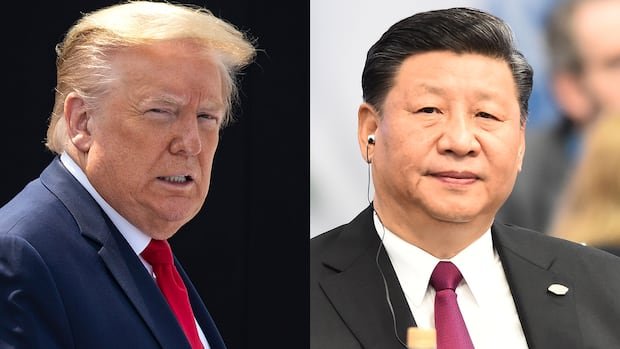
China’s dominance in the rare earth minerals market continues to give it significant leverage over the United States, despite both countries reaching a preliminary trade agreement just before a scheduled meeting between President Donald Trump and Chinese President Xi Jinping. The meeting, set to take place on Thursday during the Asia-Pacific Economic Cooperation (APEC) summit in Gyeongju, South Korea, marks the first interaction between the leaders in Trump’s second term.
The trade war between the world’s two largest economies has escalated with tariffs exceeding 100 percent, posing a threat to the global economy. This conflict underscores China’s readiness to use its economic strengths as bargaining tools in response to mounting pressures from the White House.
While there was optimism that tariffs could be avoided prior to the Trump-Xi meeting, top officials from both countries disclosed a potential trade deal following extensive discussions in Geneva and Madrid. The U.S. Treasury Secretary, Scott Bessent, and other officials announced a comprehensive framework at the Association of Southeast Asian Nations summit in Kuala Lumpur.
Although the specifics of the agreement remain unclear, it includes provisions such as the transfer of TikTok’s U.S. operations to new ownership and the possibility of China resuming soybean purchases from American farmers. Notably, China has agreed to postpone its export controls on rare earth minerals for a year, addressing a crucial concern for the U.S.
The agreement signifies a mutual effort to stabilize the bilateral relationship, according to analysts. Despite unresolved issues such as trade imbalances and technological competition, both sides appear willing to engage in negotiations on smaller matters. The upcoming meeting between Trump and Xi will likely focus on building trust and addressing key concerns.
The recent expansion of China’s export rules on rare earth minerals underscores its strategic advantage in this critical sector. With a near-monopoly on rare earth production and processing, China wields significant influence over industries reliant on these minerals, from electronics to defense equipment.
In response to China’s measures, the U.S. has pursued agreements with countries like Japan and Australia to boost its own rare earth and critical minerals supplies. However, efforts to reduce dependence on Chinese resources may take years to materialize, highlighting the challenges posed by China’s dominant position in the market.
As the leaders prepare to meet, their respective domestic political environments also play a role in shaping their negotiating positions. Xi’s focus on self-reliance in technology and consolidation of power contrasts with Trump’s domestic challenges, including a potential government shutdown. The outcome of their discussions will have far-reaching implications for global economic stability.
In conclusion, the Trump-Xi meeting carries significant economic implications, with billions of dollars at stake. The importance of avoiding conflicts between the world’s top economies is underscored by the potential repercussions on the global economic landscape.

