
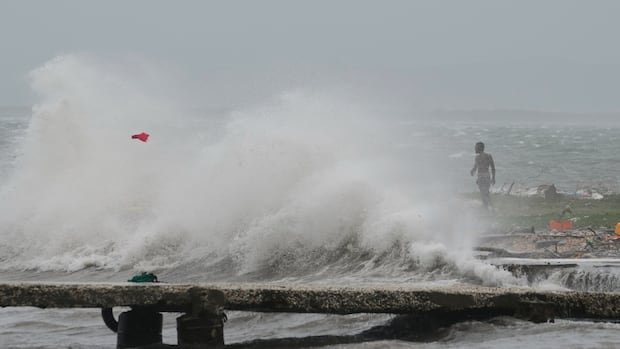
Severe flooding hit southwestern Jamaica as Hurricane Melissa made landfall as a destructive Category 5 storm, one of the most powerful hurricanes in the Atlantic’s history. Strong winds caused extensive damage, including roofs ripped off buildings and boulders blocking roads. Reports of landslides, fallen trees, and widespread power outages emerged as Melissa struck near New Hope with winds reaching 295 km/h. Officials warned that assessing the aftermath and initiating recovery efforts could be a slow process due to the severity of the storm.
Prime Minister Andrew Holness emphasized the region’s lack of infrastructure capable of withstanding a Category 5 hurricane, highlighting the urgent need for a speedy recovery. In the community of Black River, located in western Jamaica, floodwaters trapped several families in their homes, with rescue operations hindered by hazardous conditions.
Desmond McKenzie, deputy chairman of Jamaica’s Disaster Risk Management Council, described the chaotic scene, mentioning roofs being torn off and expressing hope for improved conditions to aid those in distress. Extensive damage, particularly in St. Elizabeth parish, was reported, with McKenzie noting that the area was submerged under water.
As Melissa continued to unleash its fury on the country, Jamaica faced significant challenges. The storm surge and heavy rainfall posed threats to northern Jamaica as the hurricane’s path headed towards Cuba, where it was forecasted to make landfall as a major hurricane. Thousands sought refuge in shelters, and a large portion of the population was without electricity.
Colin Bogle from Mercy Corps highlighted the resilience of Jamaican families sheltering in place despite evacuation orders, sharing his own experience of facing the powerful storm. The country braced for the impact of Melissa, the strongest hurricane to strike the island in recorded history.
Government officials emphasized preparedness for post-storm rescue operations, with boats and helicopters on standby for immediate response. As Melissa wreaked havoc across the Caribbean, claiming several lives in Jamaica, Haiti, and the Dominican Republic, the focus shifted to assessing the damage and providing aid to those affected.
Residents in affected areas, including Stephanie Brayford and her family, recounted their harrowing experiences, underscoring the unprecedented nature of the storm’s impact. With infrastructure damaged and communities devastated, the road to recovery seemed daunting.
As Melissa moved towards Cuba, authorities issued warnings about potential hazards and urged caution. Cuban President Miguel Diaz-Canel urged citizens to heed safety measures as the country braced for Melissa’s wrath. Canada offered support to the affected regions, emphasizing the need for preparedness and assistance in the aftermath of the catastrophic hurricane.
The Canadian Hurricane Centre issued advisories for eastern Canada, anticipating indirect effects from Melissa as the storm progressed through the region. While the hurricane’s direct impact might remain offshore, the potential for heavy rainfall and strong winds loomed over eastern Canada, signaling the need for vigilance and readiness.
Tag: rewrite-pending

