
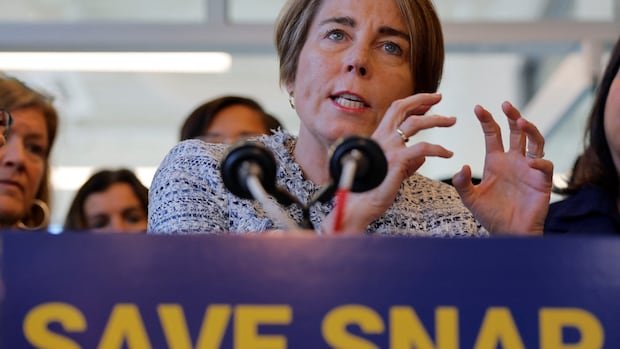
U.S. states are cautioning individuals dependent on food aid that their benefits may not be distributed starting Saturday if the federal government shutdown continues into its fourth week.
Warnings posted on approximately two dozen state websites highlight the potential for a significant benefit gap in November for recipients of the Supplemental Nutrition Assistance Program (SNAP), commonly known as food stamps, and the nearly seven million beneficiaries of the Special Supplemental Nutrition Program for Women, Infants, and Children (WIC).
The ongoing shutdown, which commenced on October 1, has now become the second-longest in history.
House representatives, Democratic senators, and mayors have urged Agriculture Secretary Brooke Rollins to utilize a SNAP contingency fund, estimated to hold around $5 billion by the Center on Budget and Policy Priorities, to cover November benefits. However, the U.S. Department of Agriculture (USDA) has declined to access these funds, opting to reserve them for emergencies and natural disasters.
In response, some states have taken action independently. California and New York have committed to providing support to food banks, while Virginia declared a state of emergency to ensure November benefits are funded.
Nonetheless, certain states are facing challenges in assisting SNAP recipients. Alaska, for instance, has found it unfeasible to redirect funds from the state treasury due to system constraints.
As the shutdown persists, food banks are anticipating increased demand, with some struggling to meet the needs without federal support. The Facing Hunger Foodbank, serving households in West Virginia, Kentucky, and Ohio, has already had to reduce food allotments due to budget strains caused by rising food costs and heightened demand.
Apart from the government shutdown, changes to access SNAP benefits are also looming due to recent policy and tax law alterations, which may result in coverage loss for some individuals, particularly starting January. Additionally, states are expected to bear a larger share of administrative costs from October 2026 onwards, unless Congress revises these policies.

