
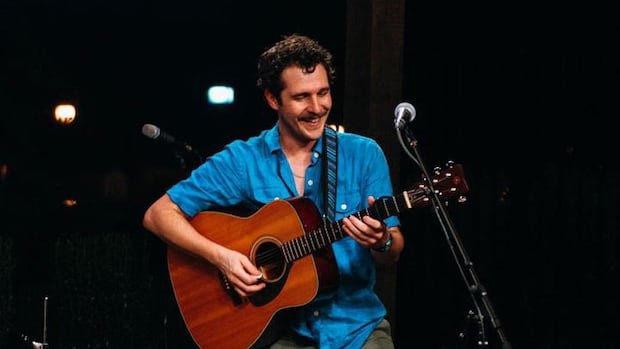
When the United States and Israel conducted airstrikes on Iran at the end of the previous month, Joseph Terrell, a songwriter and musician from North Carolina, found it hard to stop thinking about the conflict. This led him to transform his thoughts into song lyrics for a track he named “Cowboy Movie.” Reflecting on American myths of being heroic explorers, Terrell expressed in his song how these narratives reveal a different reality where the nation may not be the virtuous protagonist.
Terrell clarified that “Cowboy Movie” does not target any specific politician but touches upon specific incidents, such as the tragic bombing of an Iranian girls’ school during the conflict. Although no entity has claimed responsibility for the bombing, preliminary investigations reported by The New York Times suggested U.S. involvement. Terrell, known for sharing snippets of his songs on TikTok, highlighted the impact of his politically charged tracks on social media.
The revival of folk protest music has gained momentum among a new generation of artists online. Noriko Manabe, a music theory professor at Indiana University, noted a resurgence of politically charged singer-songwriter folk music, attributing the genre’s simplicity and authenticity as appealing factors in today’s technology-dominated era.
This contemporary wave of protest folk music distinguishes itself by directly naming politicians and administrations in hyper-specific lyrics, often released promptly after significant events. Artists like Jesse Welles have gained substantial followings by addressing current issues such as the war in Gaza and immigration enforcement in their music. Welles’ tracks, like “Tylenol” and “Charlie,” swiftly respond to unfolding events, resonating with audiences through social media platforms.
Unlike traditional folk music that often repurposed existing tunes, today’s protest folk songs present original compositions with overt political messaging. The genre’s transition to online platforms like TikTok raises questions about its longevity and impact. While the digital era facilitates rapid dissemination of protest music, scholars like Holly Swartzendruber emphasize the importance of translating this online momentum into real-world engagement to sustain the movement.
Transitioning from online platforms to live performances could be crucial for the survival and impact of contemporary protest folk music. Scholars like Manabe advocate for artists to engage with audiences beyond social media, fostering meaningful connections and potentially catalyzing real-world activism. Artists like Olive Klug and Carsie Blanton have demonstrated this by incorporating audience engagement and activism into their live performances, aiming to inspire change beyond the digital realm.
In conclusion, the surge of modern protest folk music reflects a fusion of traditional folk roots with contemporary political activism, leveraging online platforms to engage audiences and spark conversations about pressing social issues.

