
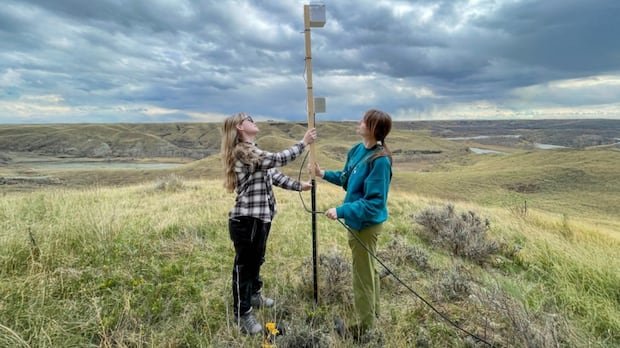
A team of graduate students at the University of Windsor is conducting groundbreaking research to monitor the nocturnal migration of birds across Canada. Natalie Emerick and Madison Bygrove have deployed 100 acoustic recorders from Vancouver Island to Newfoundland, capturing bird sounds in various locations using AI technology called Motus Audio.
The recorders, equipped with microphones pointing towards the night sky, detect and categorize bird calls, providing valuable data on nighttime bird communication and movement. This research initiative, unprecedented in eastern Canada, aims to shed light on nocturnal bird behavior during migration.
By leveraging advancements in tracking technology, Emerick and Bygrove process vast amounts of data collected each night. They have strategically placed the recorders in collaboration with existing bird monitoring networks, engaging a diverse group of hosts ranging from ornithologists to volunteers.
One key focus of their study is the impact of artificial night light on bird behavior, with preliminary findings suggesting disruptions in bird communication due to bright artificial lighting. As they continue to refine their methods, the researchers anticipate gaining deeper insights into bird migration patterns during the fall season.
The Motus Audio technology, initially developed for telemetry towers, has enabled the creation of an extensive “audio curtain” across Canada. This innovative approach, supported by researchers like Ryan Norris from the University of Guelph, offers new perspectives on bird movements through different seasons and regions.
Despite challenges in identifying species based on flight sounds, the research team remains optimistic about the potential of their project to contribute valuable data for understanding bird populations and conservation efforts. Through this collaborative effort, they aim to unravel the mysteries of bird migration and its implications for biodiversity.

