
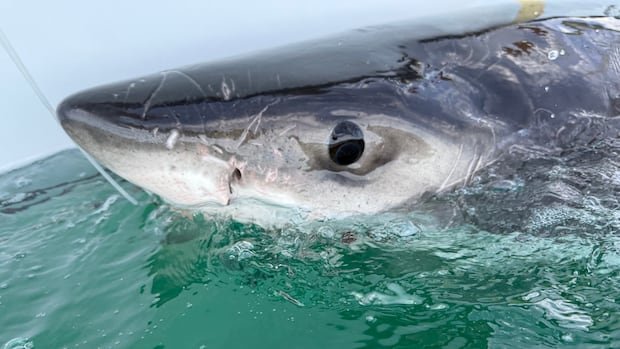
A female great white shark named Bella, weighing at least 730 pounds, is currently spending her summer in the waters off Atlantic Canada. The juvenile shark, measuring 10 feet in length, was recently tracked on July 4 as she moved through the Gulf of the St. Lawrence near Quebec’s Magdalen Islands by the OCEARCH shark tracking website based in Florida.
Bella’s first appearance this season in the Gulf of the St. Lawrence was noted on June 29 off the Eastern Coast of Prince Edward Island. The St. Lawrence Shark Observatory revealed that this sighting marked the first documented great white shark in the area for the year 2026.
Initially tagged last summer in Mahone Bay, N.S., Bella has journeyed from the Gulf of Mexico to Atlantic Canada, passing through various regions such as Cape Cod, the Gulf of Maine, south shore of Nova Scotia, north of Prince Edward Island, and most recently, the Gulf of St. Lawrence.
Researchers emphasize that the increased sightings of white sharks in Canadian waters are part of their natural behavior and not an unusual occurrence. OCEARCH’s data scientist, John Tyminski, highlighted that white sharks have historically frequented Atlantic Canada waters, with their population recovering due to conservation efforts and the resurgence of seal populations, a key food source for these sharks.
The presence of white sharks, including Bella, in Atlantic Canada waters is seen as a positive sign of ocean ecosystem recovery. Although shark encounters are rare in Canada, experts advise caution when swimming, especially avoiding murky waters, swimming at dawn or dusk, and staying away from areas with seals.
While the exact number of white sharks in Atlantic Canada waters is difficult to estimate, researchers suggest there are likely over 2,000 white sharks passing through Mahone Bay annually. Warmer ocean temperatures and improved tracking technology contribute to the increased sightings of these apex predators.
Great white sharks like Bella continue to capture attention, with notable sightings and encounters reported across various regions in Canada, including Nova Scotia and Prince Edward Island. Researchers continue to monitor and study these marine creatures to better understand their behavior and ensure coexistence with humans in the shared marine environment.

