
In April, Canadians witnessed Canadian Space Agency (CSA) astronaut Jeremy Hansen marking a historic milestone during the Artemis II mission, venturing farther into space than any human before, alongside three NASA astronauts to orbit the moon. This mission aimed to pave the way for future human missions to the lunar surface, with NASA targeting a 2028 landing on the moon with Artemis IV.
Unlike the Apollo program of the past, NASA’s Artemis program is a global initiative, with 68 countries, including Canada, signing the Artemis Accords. The goal is not just a brief visit but a sustainable presence on the moon, necessitating various infrastructure like construction vehicles, transportation shuttles, surveillance systems, and power sources.
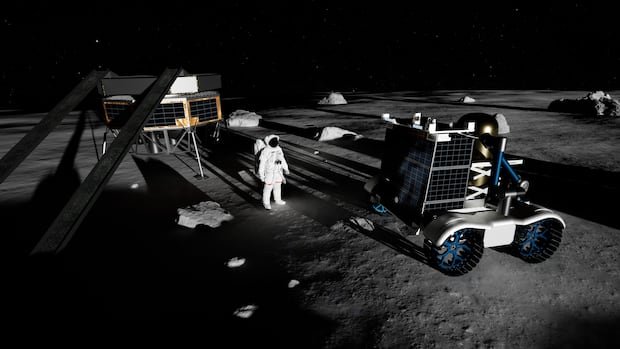
Canada is actively contributing to this lunar exploration endeavor. Although the Canadian Space Agency canceled a small lunar rover project in March, plans are in place for a larger lunar utility vehicle scheduled for potential deployment no earlier than 2033. Canadian companies such as MDA Space, Canadensys Aerospace, and Mission Control are competing to secure the final contract for this project.
NASA recently announced the Moon Base initiative near the lunar south pole, scrapping the Lunar Gateway space station. The construction of Moon Base, intended for both habitation and work, will progress through three phases, starting soon. Collaborations with commercial entities for lunar rovers and landers are underway.
Christian Sallaberger, Canadensys’ president and CEO, highlighted the need for accelerating the lunar utility vehicle program to align with the expedited Moon Base timeline. Canada’s expertise in lunar missions was exemplified by Canadensys providing camera systems for missions like Firefly Aerospace’s Blue Ghost lunar lander.
Michele Faragalli, Mission Control’s chief technology officer, emphasized Canada’s long-standing involvement in space exploration and its reputation as a leader in space robotics. The Canadian Strategic Missions Corporation (CSMC) is developing a low-enriched uranium nuclear reactor, funded by the CSA, to power long-term lunar operations, essential for Moon Base and potentially for terrestrial applications.
Daniel Sax, CSMC’s founder and CEO, highlighted the versatility of the proposed nuclear reactor technology, stating its applicability not only on the moon but also in remote areas on Earth. The Canadian technology sector sees opportunities in lunar mining, robotics, and other fields, with companies like MDA Space well-positioned to contribute. Sax emphasized the importance of Canada seizing the current momentum in space exploration to make significant contributions.
This article was sourced from CBC News.

