
A remarkable finding has emerged that is generating excitement among scientists — and could shed light on the beginnings of life on our planet.
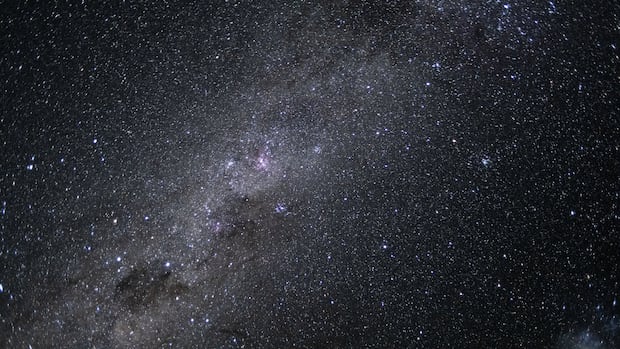
Earlier this month, researchers in Spain discovered sugar located near the Milky Way’s center, approximately 26,000 light-years from Earth.
Utilizing two radio telescopes, the team from Spain’s Centre for Astrobiology identified a four-carbon sugar in a molecular cloud. This sugar, known as erythrulose, is typically found in raspberries on Earth and is often used in self-tanning lotions.
This discovery represents the first instance of sugar being detected in the interstellar medium, a region filled with gas and dust situated between stars.
Experts highlight the importance of this finding, noting that sugars are essential for initiating life on Earth, and the exact process of sugar molecule formation on our planet has long puzzled scientists.
Sarah Gallagher, director of the Institute for Earth and Space Exploration at Western University, remarked, “The excitement stems from the fact that these are fundamental components necessary for creating nucleic acids, which are crucial for life as we understand it on Earth.”
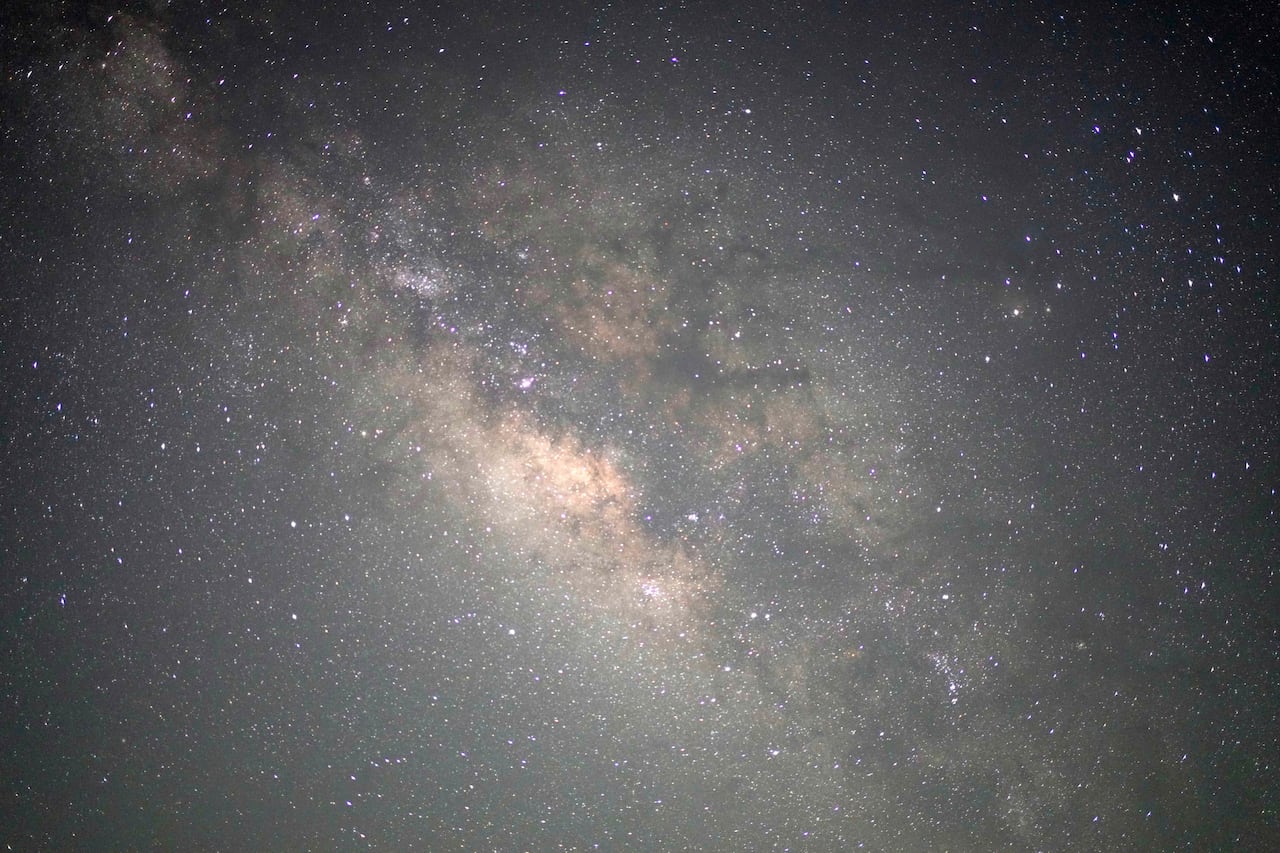
The researchers identified a four-carbon sugar within a molecular cloud in the interstellar medium. (Jon Gambrell/The Associated Press)
The finding
Five-carbon sugars are crucial as they form the backbone of both DNA and RNA, thus playing a vital role in the creation of living organisms.
Based on earlier studies, including the discovery of ribose and glucose sugars from an asteroid named Bennu last year, scientists propose that sugars were likely delivered to Earth by comets and asteroids colliding with the young planet.
However, the source of these sugars remains ambiguous. Gallagher, who was not part of the Spanish research, noted that the origin of sugar on Earth was “one of the missing links in understanding the emergence of life.”
“Now there’s a narrative suggesting that these sugars might originate from the vast clouds where stars are formed.”
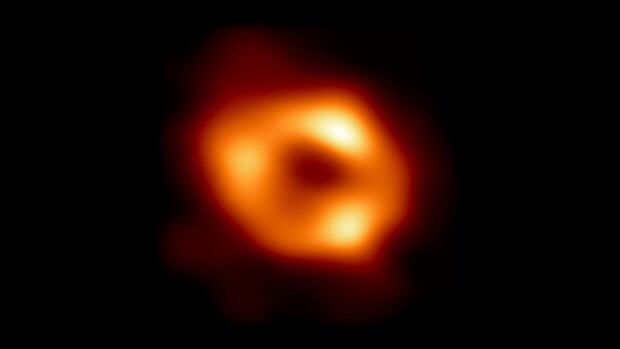
Astronomers using the Event Horizon Telescope have revealed the first image of the Milky Way’s supermassive black hole, named Sagittarius A*.
The Spanish researchers, led by Izaskun Jiménez-Serra, determined that they found enough erythrulose in the molecular cloud to estimate that up to 50 million tons of it could have landed on Earth around 4.1 to 3.8 billion years ago during the Late Heavy Bombardment.
This theory, though unverified and contentious, suggests that the inner solar system’s planets — Mercury, Venus, Earth, and Mars — experienced a “cataclysmic bombardment” by asteroids in their formative years.
The researchers indicated that their research — published on July 13 in the journal Nature Astronomy — proposes that the interstellar medium could serve as a “plausible source” of sugar not only for early Earth but potentially for other locations in the universe as well.
Furthermore, it may lead to future discoveries in space of additional sugars and “other crucial molecules essential for the origin of life.”
-
In our search for alien life, stars might be muddying their signals
-
Canadian-developed technology helps new telescope probe mysteries of the cosmos
How rare is life on Earth?
This study lends further support to the theory that some materials necessary for RNA formation may have been abundantly available on early Earth, according to Nagissa Mahmoudi, an associate professor in the Department of Earth and Planetary Sciences at McGill University.
“This contributes another piece to the puzzle regarding what was actually present.”
Mahmoudi shared with CBC News that this finding also suggests that comets and asteroids could have brought sugar molecules to other celestial bodies.
“This is thrilling. When we consider life on Earth, a major question arises: Is life unique to our planet? What distinguishes Earth? Or is life more widespread, and we simply have yet to discover it?”
The findings reinforce her belief that life could exist in other parts of the universe.
“We know these molecules arrived on Earth and became the foundational elements of life here; there’s no reason to believe that similar processes wouldn’t occur elsewhere.”

