
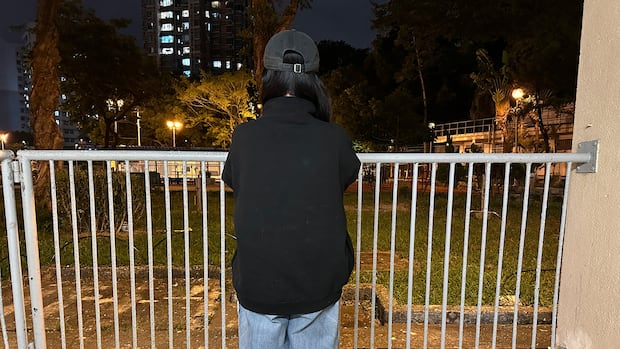
“The surprise was something I didn’t foresee.”
This reflects the feelings of L., a 21-year-old law student at the University of Hong Kong, upon learning that another student had generated explicit images of her without her consent using artificial intelligence.
At first, she thought the fault might lie with her, questioning if she had done something that led to a misunderstanding.
“I was completely stunned and quite terrified at that moment, and I took a break from social media for a while, as I was uncertain about who might have access to my pictures,” L. shared with CBC.
According to L., B., and H., three of the alleged victims, the male student’s former girlfriend found over 700 images, including AI-generated explicit content, when she used his laptop in February. All three women spoke to CBC while remaining anonymous to avoid being identified by peers.
The laptop housed roughly 20 folders filled with images of women, which contained screenshots from their social media accounts taken without permission, as well as explicit AI-crafted images showing them nude or engaged in sexual acts, as reported by L., B., and H.
“Criminalization sends a message to society that this behavior is wrong.”B.
In July, the three law students from HKU chose to publicly address the incident. They created an Instagram account to share a letter explaining what had transpired.
They mentioned that after being confronted by his ex, the male student confessed to using screenshots of the other students from social media to fabricate AI-generated explicit images featuring their faces.
H. stated that the University of Hong Kong initially instructed him to draft an apology letter, which he complied with, and subsequently received a warning letter that would be kept in his personal file for internal use. H. felt that these measures did not suffice in holding him accountable.
B. expressed to CBC that even after they reached out to the university, she still encountered him in class at least four times.
Global Issue
The university later stated that it was reviewing the case and promised to take additional action. A spokesperson for the University of Hong Kong informed CBC that the matter was still under examination.
John Lee, the leader of Hong Kong, also commented on the situation, committing in July to explore international “best practices” for regulating AI.

MrDeepFakes was the world’s most infamous platform for non-consensual deepfake pornography until CBC’s visual investigations team, in collaboration with partners Bellingcat, Tjekdet, and Politiken, exposed the Canadian pharmacist who was integral to the site.
However, months later, the three HKU students still face unresolved feelings. B. shared with CBC that their complaint to Hong Kong’s Equal Opportunities Commission was closed because the actions did not constitute sexual harassment under the ordinance, and there wasn’t enough evidence to proceed with the investigation.
In a statement to CBC, the Equal Opportunities Commission affirmed its commitment to handling inquiries and complaints under the anti-discrimination laws impartially and fairly.
The three women informed CBC that they have not reported the incident to the police, as there is currently no law in Hong Kong that criminalizes the creation of AI-generated pornography.
This situation highlights a global challenge regarding the oversight and regulation of AI-generated pornography created without consent.
“Once [someone has] access to these images, you cannot predict how they will be utilized. They could be kept private, or they might be disseminated either secretly or publicly,” H. remarked. “You lose control over [it].”
B. noted that the possibility also exists that the perpetrator’s computer could be compromised, meaning that regardless of whether the male student intended to share the images, they could still become widely accessible.
“Criminalization sends a message to society that this behavior is publicly unacceptable,” B. added.
Tackling ‘deepfakes’
In 2021, Hong Kong enacted legislation addressing the publication or threats of publishing intimate images or videos without consent, which includes “deepfakes,” defined as images or videos digitally altered using AI to swap one person’s face for another. The penalties for these offenses can be up to five years in prison.
However, this does not extend to the creation or possession of such content. Legal experts assert that this loophole needs to be addressed.
In Canada, sharing non-consensual deepfake pornography is not a criminal offense. Prime Minister Mark Carney has promised to introduce legislation that would prohibit “the production and distribution of non-consensual sexual deepfakes” during his campaign for the 2025 federal election.
Last year, South Korea enacted a law that criminalizes both the possession and consumption of such material. The United Kingdom has also classified the creation or distribution of sexually explicit deepfakes as a criminal offense amid a rise in incidents over recent years.
“Nudify” applications typically employ AI to fabricate fake images of individuals without their consent. Well-known figures like pop star Taylor Swift and U.S. Democratic politician Alexandria Ocasio-Cortez have been victims of non-consensual explicit deepfakes.
Clare McGlynn, a law professor at Durham University who contributed to drafting the U.K. legislation that outlawed pornographic deepfakes, stated to CBC that social media platforms need to enhance their efforts.

Clare McGlynn, a law professor at Durham University in the U.K., emphasizes the need for social media platforms to take stronger action against the spread of deepfake pornography. (Submitted by Clare McGlynn)
She noted that this issue is becoming increasingly prevalent and highlighted the actions of San Francisco city attorney David Chiu, who initiated legal proceedings in August 2024 against 16 of the most-visited websites responsible for creating AI-generated non-consensual explicit images.
His office reported that the websites named in the lawsuit had received over 200 million visits in the first half of 2024. By June of this year, his office indicated that 10 of these sites had been taken down or were no longer accessible in California. The attorney’s office listed some of the companies running these websites, including U.S.-based Sol Ecom and Briver, as well as U.K.-based Itai Tech Ltd.
McGlynn argued that if governments focus on larger platforms, they would not need to be as concerned about the smaller ones.
“Those are the gateways, the pipeline. It’s on TikTok. The boys see the nudify apps advertised…. If we addressed that, we could effectively tackle this issue,” McGlynn stated.
Content Becoming More Realistic
Vince Chan from the Hong Kong-based Association Concerning Sexual Violence Against Women remarked that distinguishing AI-generated content is becoming increasingly challenging due to rapid technological advancements.
For instance, he noted that in just the past two years, it has become more difficult to detect face-swapping on existing pornographic material.
“Glitches and distortions were more evident [a couple of years ago], but now, the outcomes can appear quite realistic unless the content is examined very meticulously,” he explained.
Over the past year, his organization received 11 requests for assistance related to deepfake intimate images, marking a 38 percent increase from the previous year.
Hong Kong’s privacy authority has launched a criminal investigation into the case involving the University of Hong Kong law students. However, barrister Michelle Wong, who assists victims of sexual assault and harassment, mentioned that the privacy commissioner’s authority is limited.

Hong Kong-based barrister Michelle Wong aids victims of sexual assault and harassment, noting the limited power of the privacy commissioner in combating AI deepfake pornography. (Submitted by Michelle Wong)
She stated their main focus is on the disclosure or misuse of personal data, which complicates the applicability of this case within their jurisdiction.
Wong highlighted that Hong Kong has laws against creating fake images of children under 16, indicating that there is already a framework for handling such offenses.
“I believe the original legislative intent was to protect children. However, it appears that there is a growing recognition that adults over 16 should also be safeguarded by similar legal provisions,” she remarked.
‘The Internet Feels Quite Lawless’
W., 30, who was a victim of AI-generated pornography about five years ago and prefers to remain anonymous because she is unaware of the perpetrator’s identity, recalls how her friends forwarded her photos they received via direct messages on social media, inquiring if it was her.
“They believed it was real. I also thought those pictures appeared very similar to reality, including my facial features,” she disclosed to CBC, pointing out a mole on her face.
During that time, W. reported that she cried daily and experienced nightmares. She avoided going to work, fearing to leave her house because she worried that the person sending the images may know her address.
She chose not to report the incident to the police, concerned that they would not treat her case with the sensitivity it required.
W. believed that the perpetrator had taken images from her social media profiles. Four years later, she still contemplates their identity and hopes for their arrest. She remains apprehensive of unknown men approaching her.
While she welcomes the increasing awareness surrounding AI-generated pornography, she feels powerless about resolving the issue.
“The internet seems quite lawless,” she stated. “Even if a law is enacted, how it will be enforced remains a significant question.”

