
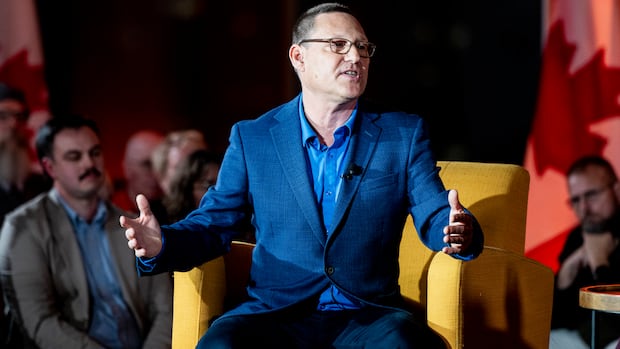
NDP leadership aspirant Avi Lewis asserts that Canada must halt the escalation of fossil fuel production, comparing it to an “addiction.”
During a panel event on Friday alongside his key rivals in the leadership contest, labor leader Rob Ashton and Edmonton MP Heather McPherson, Lewis sought to set himself apart by declaring his opposition to any further development of natural gas, oil, or coal within the nation.
“We require clear policies that differentiate us from the federal Liberals,” Lewis stated. “Continuing to increase fossil fuel production in this country is not an option.”
He emphasized that the federal NDP should be open to having “disagreements” with its provincial affiliates.
Additionally, Lewis pointed out that there are “safe methods” of producing energy that are more aligned with the 21st century.
He characterized society’s dependence on fossil fuels as an addiction, driven by greed.
“The addiction to fossil fuels is as much about the revenue they generate for provincial and federal governments as it is about the fuels themselves,” he remarked.
Lewis highlighted that experts have consistently indicated that the combustion of fossil fuels is contributing to the acceleration of global warming.
“Fossil fuels — including coal, oil, and gas — are the primary culprits of global climate change, responsible for approximately 68 percent of global greenhouse gas emissions and nearly 90 percent of carbon dioxide emissions,” according to the United Nations.

Filmmaker, activist, and third-generation New Democrat Avi Lewis acknowledges the NDP’s ‘awful election’ outcome as he embarks on his campaign for federal leadership, asserting the party must ‘return to our roots with humility’ while advocating for ‘re-democratizing’ the party and ensuring accountability for large corporations.
McPherson, representing an oil-producing region, did not contest Lewis’s assertions during the panel but later referred to his remarks as outdated.
“This has been part of the NDP’s policy since Jack Layton,” McPherson told the press. “There’s nothing particularly new here.”
The NDP’s 2021 policy document does not commit the party to restricting the growth of fossil fuel production. However, it does pledge New Democrats to eliminate Ottawa’s backing for fossil fuel subsidies, a call humorously articulated by Layton in 2003.
Nevertheless, the previous two leaders of the federal NDP, Thomas Mulcair and Jagmeet Singh, faced challenges in effectively conveying this policy. Mulcair enthusiastically endorsed a west-to-east oil pipeline as a “win-win.”
This policy stance also places the federal NDP at odds with its factions in fossil fuel-rich provinces such as Saskatchewan, Alberta, and British Columbia.
McPherson expressed her commitment to developing an employment strategy for youth in fields like trades, arts and culture, health care, child care, and green jobs through a Youth Climate Corps.
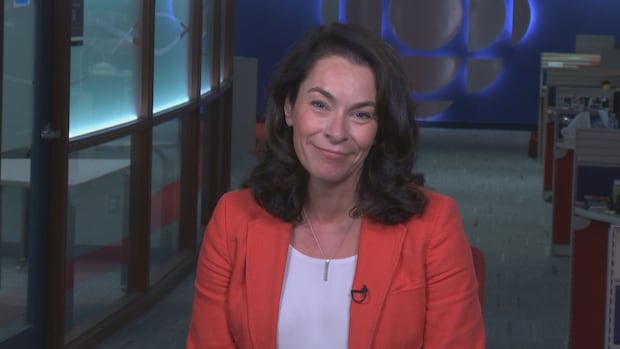
Alberta NDP MP Heather McPherson entered the federal NDP leadership race on Sunday. McPherson joined Power & Politics to discuss her vision for how to rebuild the party. ‘We don’t need to change our values, but we do need to change how we talk about them,’ says McPherson.
Furthermore, McPherson outlined her support for initiatives such as high-speed rail, retrofitting older buildings and homes, nation-building projects, and what she termed “a clean energy corridor” that could feature an east-to-west electricity grid.
Ashton addressed the necessity of enhancing renewable energy, particularly wind energy, during the panel.
“We should be constructing those windmills here, rather than importing them,” he stated. “We ought to be installing them entirely with union jobs.”

NDP leadership candidates Rob Ashton, Heather McPherson, and Avi Lewis, from left to right, participate in a panel discussion at the Mouseland Gala in Ottawa on Friday. (David Thurton/ CBC)
Reporters inquired Ashton about his stance on the expansion of fossil fuel production.
“Fossil fuels sustain numerous families in this country,” Ashton remarked. “Before any expansion can be addressed, we must evaluate the projects. It is crucial that they are conducted with free, prior, and informed consent from Indigenous nations.”
He also noted that the party should consider the environmental repercussions of such resource development, while asserting that Canada must prioritize economic growth alongside emission reductions.
“We need to devise strategies that promote a green economy, providing quality unionized jobs that offer compensation comparable to that of mining or oil field positions,” he explained.
“If we fail to provide equivalent union-paying jobs that support families within a green economy, resistance will persist.”
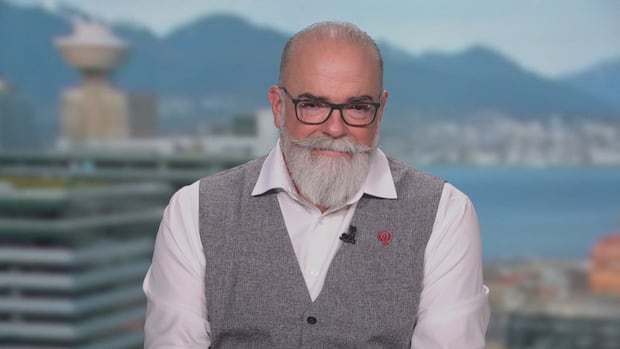
B.C. labour leader Rob Ashton tells Power & Politics he’s joining the race to replace Jagmeet Singh as leader of the New Democratic Party because the NDP has ‘strayed away’ from its traditional focus on workers.
The three contenders were present for a panel at the annual Mouseland Gala in Ottawa, organized by the Douglas Coldwell Layton Foundation. The discussion was moderated by Jordan Leichnitz, a regular panelist on CBC’s Power and Politics.
The other two official candidates in the race, Tanille Johnston and Tony McQuail, contributed video statements.

It’s been about a month since the NDP leadership race began and two main contenders have emerged: longtime climate activist and former broadcaster Avi Lewis, and NDP MP for Edmonton-Strathcona, Heather McPherson, one of the most prominent New Democrat voices in Western Canada. The NDP suffered a crushing defeat last election. The party went from 24 MPs to only seven, losing official party status. The next leader is faced with a monumental challenge to rebuild. Today, we’ve got two people with different visions of what that looks like. Martin Lukacs is the managing editor of the independent progressive media outlet The Breach. He’s also the author of ‘The Poilievre Project’. Cheryl Oates is a political consultant, who worked for former Alberta NDP premier Rachel Notley. She’s also worked on NDP campaigns across Western Canada, and teaches at McGill’s Max Bell School of Public Policy. They join host Jayme Poisson for a spirited debate about the future of the NDP. For transcripts of Front Burner, please visit: https://www.cbc.ca/radio/frontburner/transcripts

