
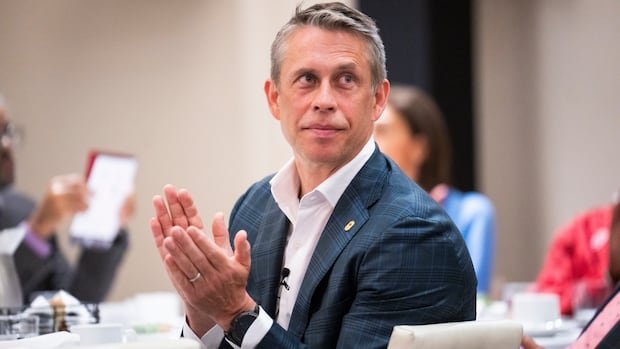
In his quest to become the prime minister of Canada, Mark Carney utilized sports as a focal point. His campaign slogan “elbows up” gained widespread popularity, highlighted in an advertisement where he stood alongside renowned actor Mike Myers near a hockey rink. Carney successfully won the election, leveraging hockey imagery to mobilize voters and counter external threats.
The recent 4 Nations Face-Off, the first top-tier men’s hockey tournament since 2016, rekindled the passion of Canadians for the sport. The event culminated in a thrilling victory for Canada, with Connor McDavid scoring a crucial overtime goal against the United States.
Hockey holds a special place in the hearts of Canadians, but the nation also cherishes achievements in other sports like the Blue Jays’ World Series, the Raptors’ 2019 championship, Bianca Andreescu’s U.S. Open triumph, and the men’s 4×100-metre relay gold at the Paris Olympics.
Despite the evident national enthusiasm for sports, there is a lack of political action to boost funding for sports in Canada. Core funding for sports has stagnated for two decades, and some national sport organizations (NSOs) are facing budget cuts in the upcoming year.
Adam van Koeverden, an Olympic sprint kayak champion and current secretary of state for sport, emphasized the importance of investing in sports to unify communities and foster development. He stressed the need for enhanced funding and investment to sustain and elevate the sports sector.
A Deloitte report commissioned by the Canadian Olympic Committee in 2019 revealed the significant economic benefits of increased physical activity and sports tourism in Canada. The recently formed Future of Sport in Canada Commission recommended urgent increments in core funding for NSOs and national Para sport organizations.
The report highlighted the pressing need to support operational requirements and prioritize safe sport initiatives. Despite the federal government’s substantial investments in the sports system over the years, NSOs have been compelled to make significant budget cuts, impacting grassroots programs and youth participation.
The reliance of NSOs on government funding underscores the critical role of federal support in sustaining sports organizations. Corporate sponsorship, while essential, remains challenging for NSOs lacking broad public interest or prominent athletes.
Athletes often find themselves pitching for sponsorships, with community engagement becoming a key factor in attracting corporate support. The financial strain on NSOs affects athletes’ preparations and performance, emphasizing the interconnectedness of funding issues in the sports ecosystem.
The escalating costs associated with international travel for competitions, compounded by foreign exchange fluctuations, pose additional challenges for NSOs. The current financial constraints also highlight the imperative of addressing the safe-sport crisis and ensuring athlete well-being across all levels of the sports system.
As the Canadian sports sector grapples with financial instability and resource constraints, there is a growing call for increased government funding and strategic investments to nurture talent, promote participation, and uphold the integrity of sports in the country.

