
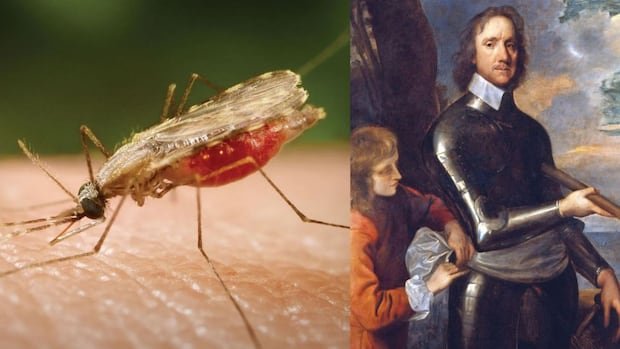
A proposal has been put forward by a city councillor in Cork, Ireland to erect a public statue of a mosquito. This statue would not depict just any ordinary mosquito, but the specific insect believed by some in Cork to have bitten the English invader, Oliver Cromwell, leading to his demise due to “Cork fever,” an old term for malaria. If the idea comes to fruition, it would likely be the world’s smallest public statue, as mentioned by Green Party councillor, Oliver Moran, during a discussion with guest host Nora Young on As It Happens.
Moran recognizes the controversial nature of Cromwell’s legacy, with differing perspectives depending on one’s origins around the Irish Sea. In Ireland, Cromwell is remembered for the harsh Cromwellian campaigns of the 17th century, involving military actions that resulted in the deaths of hundreds of thousands in an effort to establish English dominance over the country.
Acknowledging Cromwell’s lack of popularity in Ireland, Moran believes that commemorating the mosquito allegedly responsible for his demise might resonate with many. The councillor shared the inspiration behind his initiative to honor the insect during a conversation with Young, where he explained that the idea emerged from a social media discussion.
Describing the envisioned statue, Moran emphasized that it is still in the early stages of planning, with suggestions for its placement ranging from an empty plinth outside Cork City Hall to a historical fort linked to the Cromwellian era in the city center. While some may question the historical accuracy of attributing Cromwell’s malaria to a specific mosquito, Moran highlighted the symbolic value of the story in illustrating the downfall of tyrants and the vulnerability of the mighty to seemingly insignificant forces.
Furthermore, Moran sees the proposal as an opportunity to explore the relationship between public art and the natural environment of Cork, considering the city’s marshy origins reflected in its Irish name. This initiative aims to not only celebrate the people within the city but also its unique environmental characteristics.

