
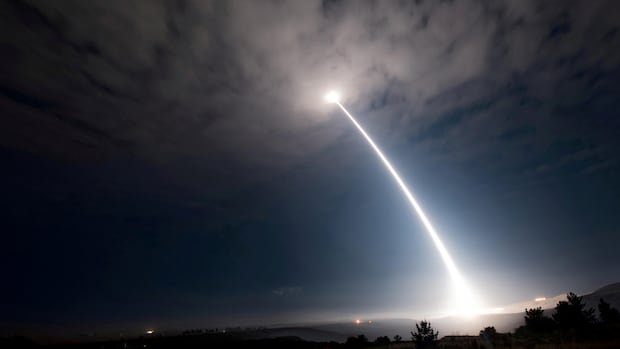
The recent discussion on the testing of nuclear weapons has resurfaced after a long period of inactivity. Russia carried out a test of a nuclear-powered missile without detonating a live bomb. In response, President Donald Trump announced that the U.S. would recommence nuclear weapons testing.
Since the start of the 21st century, North Korea has been the only country to conduct nuclear weapons tests, all of which were conducted underground. The last nuclear test by the U.S. took place in 1992, while Russia’s most recent test was in 1990, and China ceased testing in 1996.
Historically, the most visually striking nuclear tests were the open-air tests in the late 1940s and 1950s, which produced iconic and chilling images of the nuclear era. The enduring impacts of these tests are still evident today, particularly in places like Bikini Atoll, where radioactive fallout contamination persists, rendering it uninhabitable.
The majority of atmospheric testing ceased in 1963 with the signing of the Partial Test Ban Treaty by key nations like the U.S. and the Soviet Union. While underground testing continued through the 1980s, efforts were underway to completely halt nuclear testing. In 1992, the U.S. implemented a testing moratorium, followed by the adoption of the Comprehensive Nuclear-Test-Ban Treaty (CTBT) in 1996, which prohibited all nuclear test explosions.
The CTBT established a global monitoring system to detect any nuclear tests, ensuring transparency and accountability. Despite this, the treaty has not been fully enforced due to the lack of ratification by major nuclear powers and other nations.
Recent developments suggest a resurgence in nuclear testing activities, albeit in different forms. Russia’s recent tests of a nuclear-powered missile and an underwater drone capable of delivering a nuclear strike have raised concerns. It remains uncertain whether Trump’s announcement of resuming nuclear testing refers to missile tests akin to Russia’s or actual nuclear detonations.
While the U.S. has the capability to conduct underground testing, there has been no immediate need to do so according to the National Nuclear Security Administration. Trump’s latest stance on nuclear testing contrasts with his earlier statements expressing a desire to engage in talks with Russia and China to reduce nuclear threats.

