
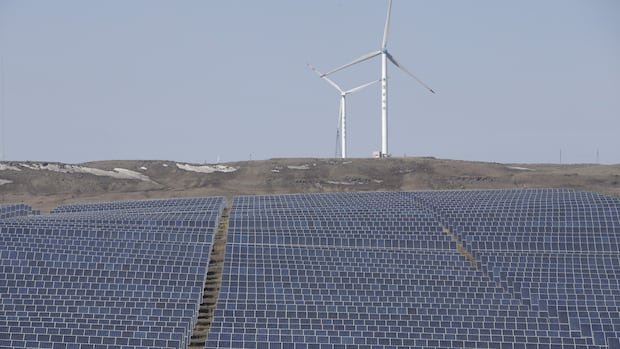
In the vicinity of China’s Gobi Desert, large wind farms operated by artificial intelligence are generating electricity at a significantly lower cost compared to coal power. The innovator behind this technology, Lei Zhang, plans to replicate this model in remote areas of Canada. Zhang, the billionaire founder of Envision, a leading green energy company based in Shanghai and the world’s second-largest wind turbine manufacturer, is known for his visionary approach akin to Steve Jobs, capable of transforming futuristic energy concepts into reality.
During a visit to Envision’s headquarters in China, Zhang shared proposals aimed at addressing Canada’s energy challenges by leveraging Chinese AI technology. While these initiatives could provide solutions for Canada’s energy needs, concerns have been raised about potential Chinese government influence over Canada’s power grid through this technology. Zhang highlighted the remarkable cost reductions in green energy production, emphasizing that it is now more economical to construct new solar and wind facilities than to operate old coal plants.
AI plays a crucial role in enabling the efficiency and viability of green energy systems, according to Zhang. He emphasized that real-time weather forecasting and energy grid management require AI technology for optimal performance, tasks that are beyond human capabilities. Envision’s flagship project, an off-grid facility in China’s Inner Mongolia region, demonstrates the successful integration of AI with renewable energy sources to produce hydrogen and ammonium sustainably.
Zhang expressed confidence in replicating similar projects in Canada, highlighting the country’s vast natural resources suitable for off-grid energy solutions powered by wind. Discussions with Canadian Prime Minister Mark Carney and other stakeholders have explored the potential for collaboration in advancing renewable energy infrastructure in Canada. Despite China’s progress in renewable energy, concerns persist over the simultaneous expansion of coal plants, reflecting a dual-track energy policy that combines renewable sources with continued reliance on coal.
Greenpeace advocates for a phased transition from coal power and supports decentralized energy systems closer to communities for enhanced efficiency. The debate over adopting Chinese-driven energy technology in Canada raises national security concerns, with critics warning about potential risks associated with foreign-operated infrastructure. Zhang assured that Envision’s technology poses no security threats and emphasizes collaboration with local partners and regulators for transparency and accountability.
As China embraces green energy, contrasting the U.S.’s stance, Zhang underscores the inevitability of transitioning to renewable energy driven by scientific principles. With China at the forefront of developing advanced energy management systems, the question remains whether Canada is prepared to embrace these innovative solutions.

