
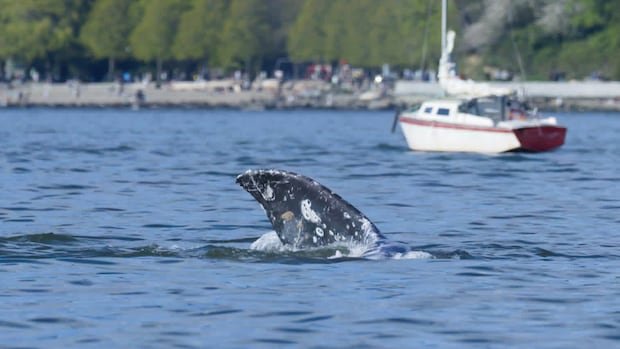
A recent discovery on the west coast of Vancouver Island revealed additional deceased grey whales, bringing the total number to seven fatalities this year. Paul Cottrell, the marine mammal coordinator at the Department of Fisheries and Oceans (DFO), mentioned that two dead grey whales were reported by a hiker and a pilot over the weekend, prompting the need for further investigation into the cause of these deaths.
This surge in whale fatalities follows a distressing pattern, with four grey whale carcasses found within a span of just 10 days in April. Cottrell expressed sadness at the poor body condition of these whales, describing them as “basically a bag of bones.”
Researchers attribute the deaths to a significant drop in available food sources in the whales’ Arctic feeding grounds, leading to starvation as they migrate back to the north. The recent spike in grey whale mortalities has raised concerns among experts. John Calambokidis, a research biologist at Cascadia Research Collective, expressed growing alarm at the rate of whale deaths being discovered.
The Pacific Ocean has witnessed a total of 36 grey whale fatalities this year, with 17 of these occurrences confirmed off the coast of Washington state. Malnutrition remains a common factor among the examined whales, indicating a worrying trend. Calambokidis noted that the pace and scale of these deaths are unprecedented and cause for significant concern.
Collaborative efforts are underway between DFO and partners in California, Oregon, and Washington state to address this escalating issue. Cottrell emphasized the importance of monitoring the situation closely, anticipating more whale fatalities as they continue their northward migration until June. With the grey whale population estimated at just under 13,000, concerns about the declining population persist.
Individuals who encounter distressed marine mammals are encouraged to report such sightings to the Department of Fisheries and Oceans for further assistance.

