
In Canada’s northern regions, an uptick in polar bear sightings near communities has sparked concerns among residents. Experts initially linked this behavior to the bears being malnourished and driven ashore by diminishing sea ice, potentially leading them to seek human encounters as a food source. However, findings from an 11-year study by the University of Saskatchewan and University of Manitoba researchers challenge this assumption, indicating that while declining sea ice plays a role, it is not the primary factor as previously believed.
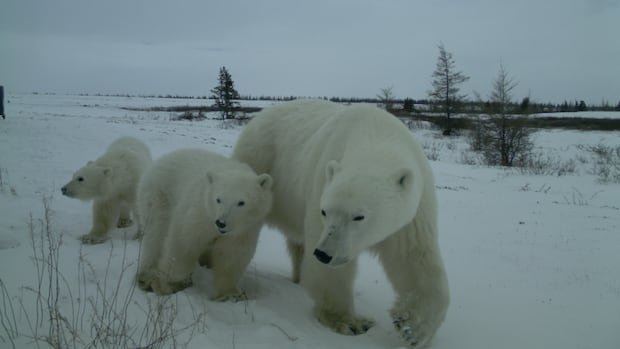
Professor Douglas Clark from the U of S School of Environment and Sustainability revealed that contrary to expectations, it was not just underweight bears venturing closer to human settlements. Rather, all bears, regardless of body condition, age, or sex, were more likely to approach humans the longer they spent off the ice. Trail cameras installed by Clark 15 years ago in Wapusk National Park near Churchill, Manitoba, captured over 500 bear visits, allowing researchers to analyze sea ice patterns and human activities in the area.
Parks Canada observed a trend of polar bears being attracted to new field camps, prompting further investigation into the reasons behind these interactions. Clark, a seasoned polar bear scientist with over 30 years of experience, and his team compiled data indicating that the bears’ increased presence near humans was a result of climate change-induced sea ice loss, rather than a deliberate effort to seek out people as food sources.
The study, recently published in Arctic Science, emphasized that while some bears were hungry, they did not display predatory behavior towards humans. The shrinking sea ice was pushing the bears ashore for longer durations, bringing them into closer contact with human populations. The research team highlighted the importance of understanding that polar bears are not becoming more aggressive towards humans due to food scarcity, although encounters might increase as they spend more time on land.
Assistant Professor Alex Crawford from the U of M’s department of environment and geography, a collaborator on the study, underscored the need to monitor polar bear behavior amidst changing environmental conditions. The ongoing research aims to track how alterations in habitat and food availability might impact bear behavior in the long term.

