
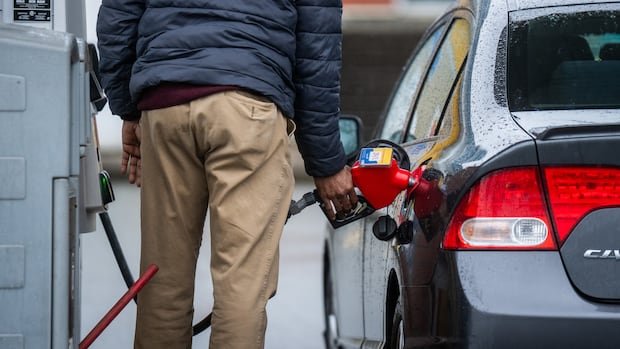
Ride-hail driver Kuljeet Singh from Vancouver finds each visit to the gas station a stressful experience. Singh, who drives for Uber and Lyft, expresses concern as he watches the rising cost of fuel, sometimes jokingly admitting to feeling anxious about it. The recent surge in global gas prices, attributed to military actions in the Middle East impacting oil supply routes, has significantly affected drivers like Singh who spend long hours on the road.
Gas prices in Canada, as reported on Gasbuddy.com, are currently averaging around 168.1 cents per liter, with British Columbia experiencing even higher costs at 187.3 cents per liter. For Singh, this means an extra $20 to $25 spent every few days when refueling, totaling an additional $150 to $200 monthly to maintain his driving routine in downtown Vancouver.
Industry experts warn that the escalating gas prices could lead to burnout among ride-hail drivers struggling to cover these increased expenses. Despite Canada’s oil production capabilities, the interconnected nature of the global oil market means that disruptions in supply chains worldwide impact domestic prices, as explained by Joe Calnan, Vice President of Energy at the Canadian Global Affair Institute.
Regarding the impact on drivers, Earla Phillips, Vice President of the Rideshare Drivers Association of Ontario, shares concerns about the financial strain caused by high gas prices. Many drivers are already facing challenges meeting financial obligations, with some resorting to food banks for sustenance. While government initiatives aim to support gig workers, criticisms persist regarding the adequacy of these measures in ensuring fair compensation and safety for drivers.
Phillips describes adjusting her driving behavior to cope with the increased costs, selectively accepting trips to optimize earnings. She raises safety concerns, noting that drivers may feel pressured to work longer hours, potentially compromising safety standards. To alleviate the burden on drivers, she suggests ride-hailing companies implement fuel surcharges for passengers during periods of high gas prices, a strategy previously adopted by Uber in response to similar market conditions.
As gas prices continue to rise due to ongoing conflicts in the Middle East, drivers like Abdul Jaber contemplate seeking alternative sources of income to sustain their livelihoods. Jaber highlights the growing challenges faced by ride-hail drivers, hinting at a potential shift to other sectors, such as construction or hospitality, to supplement their earnings.
In a bid to support drivers during these economically challenging times, ride-hailing company Hopp, operating in the Greater Toronto Area, plans to introduce targeted measures to assist drivers in managing immediate cost pressures while maintaining a fair and sustainable platform for all stakeholders. Despite these efforts, the future remains uncertain for many ride-hail drivers grappling with the financial repercussions of soaring gas prices.

