
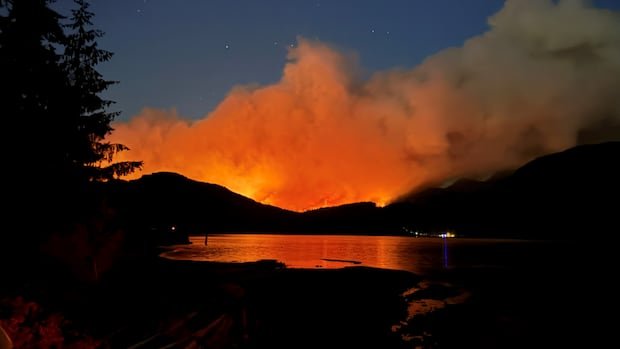
Wildfire experts are warning that despite a potentially quiet start to the wildfire season in Canada, ongoing drought conditions and a warm summer could lead to another severe year. Mike Flannigan, a wildfire expert at Thompson Rivers University, believes this year will be crucial in determining whether Canada’s wildfire seasons, driven by human-caused climate change, have entered a new normal where most years see significant fire activity.
While it is challenging to predict precisely how the wildfire season will unfold in April, there are indicators pointing to potential risks. Parts of Canada, including wildfire-prone regions in British Columbia, northern Manitoba, and eastern Northwest Territories, have emerged from winter with abnormally dry or drought conditions. Long-range forecasts suggest above-average temperatures across much of Canada in the coming months, with the possibility of El Niño conditions developing.
Despite some areas showing early signs of wildfire-conducive conditions, other parts of the country, particularly those with lingering snowpack from a stormy winter, are in better shape as the season approaches. However, experts like Richard Carr from Natural Resources Canada are monitoring regions like southern B.C., southern Alberta, southwestern Saskatchewan, New Brunswick, and areas around Hudson Bay and eastern Northwest Territories for potential wildfire risks as the summer progresses.
Canada is facing unprecedented challenges as it enters the wildfire season, having experienced three consecutive severe fire years. Climate change, fueled by fossil fuel emissions, is intensifying wildfire seasons by creating drier conditions that make forests more susceptible to ignition. Moreover, managed forests in Canada are releasing more carbon than they absorb, contributing to a concerning climate feedback loop.
The impact of wildfires extends beyond the immediate fire zones, with smoke posing health risks to populations even far from the flames. Studies have shown high rates of post-traumatic stress among evacuees, and smoke exposure during wildfires can lead to acute and chronic health issues, resulting in significant economic costs and health consequences.
To mitigate wildfire risks, experts emphasize the importance of public vigilance, especially in ensuring that potential fire sources like campfires are fully extinguished. As the snow melts and dead vegetation becomes exposed, the risk of wildfires in the spring season increases, making it crucial for individuals to take preventive measures to reduce the likelihood of new fires.
Overall, as Canada prepares for the upcoming wildfire season, the focus remains on monitoring conditions closely and taking proactive steps to minimize the impact of wildfires on communities and the environment.

