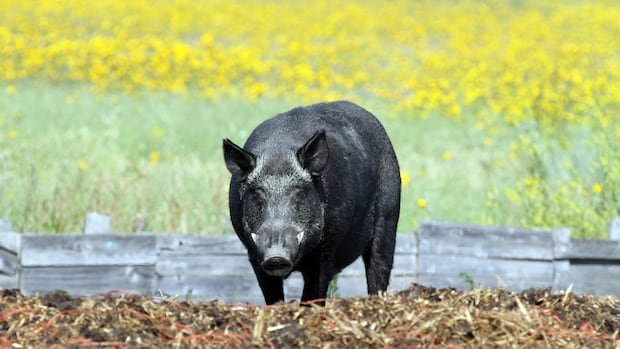
Thermal drones, in conjunction with emerging artificial intelligence technologies, are proving to be effective in bolstering Alberta’s defenses against invasive and destructive wild boar. According to Hannah McKenzie, a wild boar specialist with the Alberta government, the integration of drones is part of a multifaceted approach to address the wild boar issue.
A recent report highlights a partnership between Alberta Agriculture and the University of Calgary to evaluate a novel aerial surveillance system for tracking wild boar, which pose a growing threat to agriculture and ecology in the Prairies. The report, released on the Alberta government website in late March, emphasizes the use of automated drones equipped with infrared cameras as a cutting-edge and non-intrusive method for detection.
In the spring of 2024, researchers deployed thermal drones with heat radiation sensors to locate wild boar. The drones, particularly effective at night, captured distinct heat signatures of the boars against the cooler background. Subsequently, artificial intelligence programs were trained to analyze the footage, identify wild boar accurately, and document the sightings.
Traditional tracking methods such as ground tracking and helicopter surveys have limitations due to the elusive nature of wild boar, which are nocturnal and avoid human detection. The use of thermal drones provides a valuable aerial perspective, enabling researchers to locate the animals more efficiently.
Thermal drones have demonstrated success in combating wild boar infestations in other regions. These animals, which often travel in groups known as sounders, are highly destructive to the environment and agriculture. The drones offer a means to observe these roaming families without driving them into hiding.
The wild boar population in Alberta comprises Eurasian wild boar and hybrid species resulting from crossbreeding with domestic pigs. These hybrids, known as “super pigs,” are highly destructive and pose a significant threat to the pork industry. They are prolific breeders, causing extensive damage to habitats, crops, and livestock. Additionally, they can spread diseases to domestic pigs, such as African swine fever.
To proactively address the wild boar issue, the Alberta government is shifting towards more proactive eradication measures, including monitoring, trapping, and implementing stringent regulations on wild boar farms. The thermal drone project marks a significant advancement in surveillance and detection capabilities, potentially leading to a more aggressive approach against wild boar populations in Alberta.
The project aimed to achieve three main objectives: training AI programs for effective wild boar detection, establishing a standardized database for sightings, and using AI to create a digital habitat map predicting wild boar concentrations in Alberta. Fieldwork conducted in the spring of 2024 covered over 3,000 kilometers and involved testing at two different farms in Alberta.
Despite the promising results of the thermal drone project, challenges remain, such as accurately detecting small piglets and distinguishing wild boar from other wildlife. Future efforts will focus on refining the AI models to enhance detection accuracy across various landscapes.
In addition to surveillance, the project developed a habitat suitability map to predict areas where wild boar are likely to inhabit in Alberta. This modeling approach, incorporating public sightings and habitat data, will aid in prioritizing mitigation efforts and resource allocation to combat wild boar infestations effectively.
The collaborative and long-term monitoring program, coupled with advancements in technology, signifies a step forward in the ongoing battle against wild boar in Alberta. While complete eradication is a complex and long-term goal, the innovative strategies and partnerships in place demonstrate Alberta’s commitment to addressing this persistent threat.

