
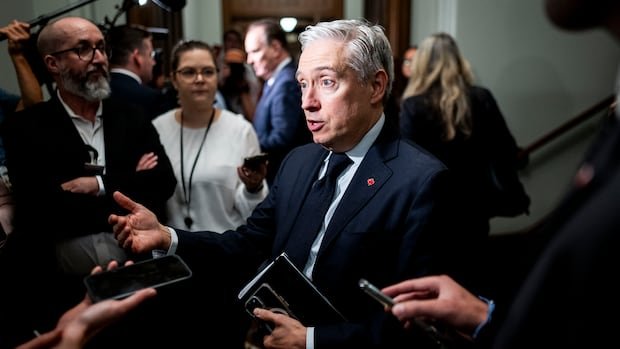
The federal Liberal government has unveiled plans to establish a dedicated financial crimes agency to combat online scams as part of a comprehensive national anti-fraud strategy, as announced by Finance Minister François-Philippe Champagne on Monday. The strategy is set to be introduced on November 4 alongside the fall budget, with Champagne highlighting the urgency to address the increasing sophistication of financial fraud impacting more Canadians.
A surge in complex financial scams, including ghost texts, phishing links, and fraudulent bank emails, has posed a significant threat to Canadians, resulting in an estimated $643 million in losses due to fraud in 2024. The proposed measures by the government include amending the Bank Act to mandate banks to implement policies for preventing and addressing fraud, aiming to position Canada as a global leader in combatting financial crime.
Although the cost of establishing the new financial crimes agency has not been finalized, Champagne emphasized the importance of investing in cutting-edge strategies to combat evolving financial crimes effectively. The announcement was made in collaboration with Public Safety Minister Gary Anandasangaree, Wayne Long, secretary of state for Canada Revenue Agency and financial institutions, and Stephanie McLean, secretary of state for seniors.
In parallel, the Liberals’ recent pre-budget announcement coincides with calls from the Conservatives for a fiscally responsible budget. Conservative Leader Pierre Poilievre urged the government to prioritize reducing taxes and keeping the deficit below $42 billion, citing concerns over Canada’s fiscal state. While the parliamentary budget officer projected an increase in the budget deficit, the International Monetary Fund acknowledged Canada’s strong fiscal position compared to other G7 nations.
Champagne and Secretary of State Long alluded to the IMF’s assessment, highlighting Canada’s fiscal capacity to make strategic investments while maintaining fiscal discipline. The upcoming budget is expected to address both current deficits and potential spending cuts, reflecting the government’s commitment to responsible financial management amidst economic challenges.
As different political parties present their budget demands, including the Bloc Québécois and the New Democrats, negotiations are ongoing to secure support for the upcoming budget. The Bloc Québécois outlined specific demands related to health transfers, infrastructure investments, and social welfare programs, while the New Democrats emphasized the need for significant investments in job creation, healthcare, and housing during discussions with Prime Minister Mark Carney.

