
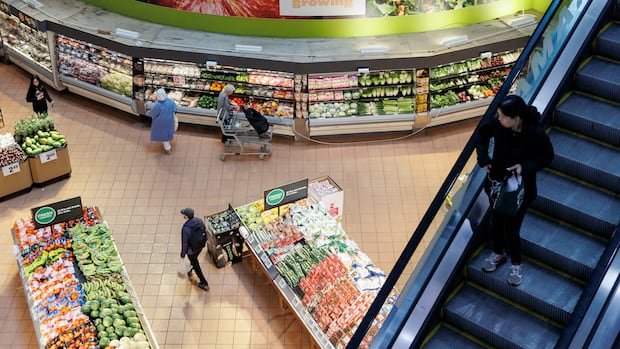
A push for more competition in Canada’s grocery sector could potentially be fueled by initiatives such as food terminals, increased domestic food production, and stricter enforcement against anticompetitive practices, according to independent grocers and industry experts. Prime Minister Mark Carney unveiled a $3.2-billion food security strategy, featuring measures to enhance grocery sector competition.
The strategy entails a $1-billion investment to establish and expand food terminals and hubs, like Toronto’s Ontario Food Terminal, to enable independent grocers to procure food at competitive prices. The government plans to enhance the Ontario Food Terminal by year-end and initiate the construction of two new terminals and expansion of 10 food hubs by 2028.
Moreover, the strategy allocates $12.9 million annually to the Competition Bureau for detecting anticompetitive behavior in the industry and enforcing regulations. Additionally, funding is earmarked for producers to process more foods domestically and boost greenhouse food cultivation.
Gary Sands from the Canadian Federation of Independent Grocers hailed the strategy as positive news for independent grocers and consumers, anticipating enhanced affordability and competitiveness. Sands particularly praised the addition of more food terminals, emphasizing their potential to bolster independent grocers’ competitiveness.
The Ontario Food Terminal, described as a vital hub by Sands, facilitates the aggregation of fresh produce from various small and medium-sized producers. The terminal’s unique model allows grocers to explore offerings from numerous producers and negotiate for lower prices, fostering increased opportunities compared to traditional supplier arrangements.
Despite operational challenges, Munther Zeid of Food Fare in Winnipeg sources produce from the Ontario terminal due to cost advantages. Zeid reported saving 15 to 20 percent on produce costs by procuring from the terminal, though he still relies on large wholesalers like Sobeys and Loblaw for packaged goods.
Christy McMullen, chair of the Ontario terminal’s board, envisions facility upgrades supported by federal funding to enable the sale of meat and dairy products, broadening price competition across product categories.
While optimistic about the strategy’s potential, Craig Cavin from Country Grocer on Vancouver Island remains cautious about immediate impacts. Cavin emphasized the need for shorter food supply chains to mitigate costs, especially amidst global fuel price fluctuations.
The strategy’s emphasis on enhancing competition up the supply chain rather than solely at the retail level is seen as promising by Keldon Bester of the Canadian Anti-Monopoly Project. Bester believes the strategy, though not an instant solution, could lead to tangible changes in product availability and variety for Canadian consumers in the near future.

