
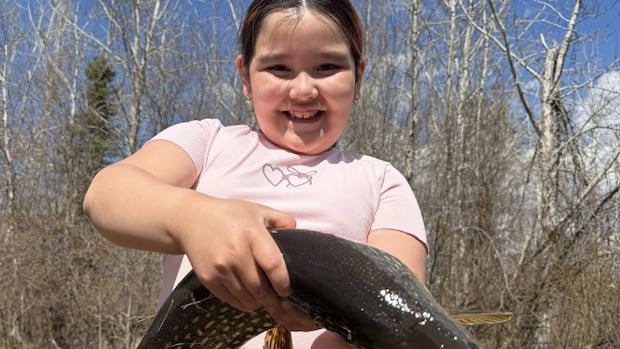
Clearwater River Dene Nation in Saskatchewan has adopted a unique approach to educate students by integrating seasonal land-based learning into their curriculum. Situated approximately 520 kilometers north of Saskatoon, the community leverages this method to enhance student engagement.
Grade 11 student Landon Moise expressed enthusiasm for the program, highlighting the various opportunities it offers, such as interacting with scientists and collaborating with industry professionals like NexGen in their future mine projects. The students are currently exploring the traditional practice of snare fishing.
Paul Haynes, the school’s land-based educator, explained the snare fishing technique, which involves using a long branch typically sourced from flexible trees like poplar or birch. The students fashion a snare at the branch’s end using rabbit snare wire, with the pole’s length varying based on the fishing location.
Finding the fish is a crucial step in this process, as Haynes described it as an art form. He emphasized the importance of visually locating the fish and aligning the snare accurately for a successful catch. The students are gradually mastering this skill, with some already demonstrating proficiency.
In response to challenges posed by the COVID-19 pandemic, the school revamped its teaching methods to rekindle student interest. By moving away from traditional camp-based learning, the institution successfully reignited student enthusiasm for education.
The revamped approach has not only increased student attendance but also instilled a deeper appreciation for practical learning experiences like snare fishing. Landon Moise emphasized the value of this hands-on education, recognizing its significance in providing sustenance to families and nurturing future generations.
To further enrich the learning environment, the school pairs older students with younger ones for mentorship and safety during land-based activities. Haynes praised the program’s evolution, noting the collaborative learning dynamic spanning across different age groups within the community.
Snare fishing serves as a bridge between traditional and modern scientific knowledge, allowing students to explore concepts like fish biology and conservation practices. Ethical fishing methods and the responsible handling of fish are integral parts of the curriculum, emphasizing sustainability and respect for nature.
The program also incorporates cultural teachings on hunting and fishing rights, ensuring that students understand and practice these activities ethically. Any harvested fish not distributed to families are utilized for student lunches, promoting a zero-waste approach.
Elders Doreen Louise Moise and Pauline Fontaine play a crucial role in passing down traditional knowledge to students, fostering a sense of community and cultural continuity. Their mentorship contributes to the preservation of ancestral practices and instills pride in the younger generation.
High school student Carmen Haineault highlighted the joy of sharing the fishing experience with younger children and emphasized the importance of teaching proper fish handling and respect for nature. The program not only imparts practical skills but also fosters a sense of pride and connection to their heritage.

