
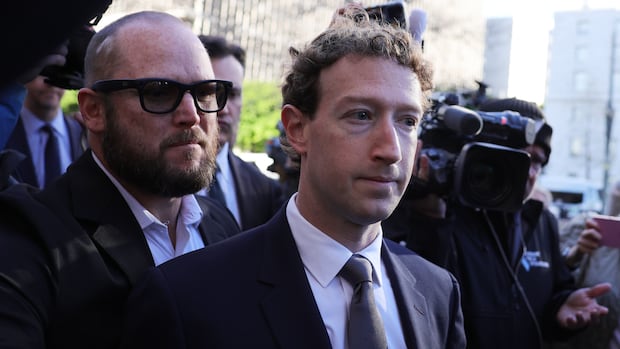
Meta has encountered two legal defeats regarding child safety on its platforms this year, and now it is about to enter what might be its most significant trial starting Tuesday.
Jury selection occurred last week in Oakland, California, for the federal case overseen by U.S. District Judge Yvonne Gonzales Rogers. Although the case will be decided by an eight-member jury, their role is merely advisory, with the final verdict resting solely with Judge Rogers.
The proceedings are anticipated to last a minimum of six weeks, and may involve testimonies from Meta’s CEO Mark Zuckerberg and Instagram head Adam Mosseri.
Here’s additional information about the trial and its implications.
Who is bringing the lawsuit?
The trial’s roots trace back nearly three years, when a coalition of states, led by officials from both major U.S. political parties, filed a collective lawsuit in federal court in California. The suit claims that Meta—parent company of Facebook, Messenger, Instagram, and WhatsApp—violated federal regulations by gathering data on users under the age of 13 without obtaining parental consent.
The 233-page complaint accuses Meta of using misleading practices to hide the harmful and addictive nature of its platforms for young users, profiting from their attention through data collection and targeted advertising.
Meta is facing a major U.S. trial over allegations it designed Facebook and Instagram to keep young users hooked and misled consumers about their safety.
California, Colorado, Kentucky, and New Jersey are the first four states involved in this trial. An additional twenty-five states may pursue similar cases later, although a negative verdict for Meta could compel the company to seek settlements to avoid prolonged litigation with these states.
“The state attorneys general are aiming for a strong outcome,” remarked Eric Goldman, a professor and co-director at the High Tech Law Institute at Santa Clara University School of Law, to The Associated Press. “They aim to establish a significant precedent in this case, seeking extraordinary damages and structural remedies should they prevail.”
Last week, Judge Rogers denied Meta’s request to bar a crucial witness for the plaintiffs, Arturo Béjar, from testifying in the forthcoming trial.
Béjar, who previously served as a director of engineering at Facebook, provided testimony earlier this year in a case initiated by New Mexico, revealing that Facebook was aware from internal studies that its platform was causing online harm to teens—such as bullying and exposure to sexual content—but did not take appropriate measures. He described Meta’s safety protocols as “grossly inadequate” and stated that the company lacks sufficient resources to address safety violations.
What are the demands?
The states have not disclosed the specific monetary damages they are pursuing. However, Meta indicated in a legal document that it might confront financial penalties as high as $1.4 trillion USD during the trial. This amount is almost equivalent to the company’s entire market capitalization—representing the total value of all its shares in the stock market.
“A sanction of this magnitude has no precedent in the history of consumer protection enforcement,” Meta stated in a court filing last month.
-
Canada vows to restrict social media for kids under 16. Teens say they’ll ‘always find a way’
-
More countries are pushing for youth social media bans. Is the world reaching a tipping point?
If Meta is found liable, the court will ultimately decide the financial penalty, and some legal analysts argue that the $1.4 trillion figure is implausible.
“It’s not feasible in the sense that Meta does not possess that much capital and would be unable to pay such a sum,” explained James Grimmelmann, a law professor at Cornell Law School and Cornell Tech, to AP. “An award of that size would bankrupt Meta, eliminate its ownership, and effectively result in the states owning Meta.”
Besides financial compensation, the attorneys general from the four states are also requesting the judge to mandate alterations to Meta’s platforms, which include enforcing age restrictions and removing infinite scrolling features.
Meta’s position
Meta contests the allegations and asserts that the evidence presented in the trial will demonstrate its dedication to safeguarding young users.
“We have listened to parents, collaborated with experts and law enforcement, and performed extensive research to grasp the issues that are most significant,” the company declared in a statement.
Since the lawsuit was initiated, Meta has implemented new safety features. It introduced teen accounts on Instagram, which are set to private by default and include messaging restrictions, content limitations, and parental controls. The firm is also employing artificial intelligence to identify if users under 13 are accessing Instagram or if teenagers are providing false age information to gain access to adult accounts.
A New Mexico judge has ordered Meta to pay $567 million US after finding the company created a public nuisance and misled consumers about the safety of its platforms for children. Meta says it will appeal the ruling.
Meta’s legal challenges
Last month, Meta reported a rare decline in profits, partially attributed to legal expenses amounting to $2.4 billion USD.
In the New Mexico case, which is currently under appeal, jurors ordered Meta in March to pay $375 million USD in civil penalties. In a subsequent ruling last month, the judge imposed an additional $567 million USD in damages, primarily directed toward treatment services for youth and awareness campaigns.
-
New Mexico court orders Meta to pay $567M to address platforms’ harms to young people
-
Jury in Los Angeles finds Meta and YouTube liable in landmark social media addiction trial
The judge mandated new safety measures for users on that platform, such as time restrictions for minors and AI chatbot limitations.
Over 1,000 school districts across the U.S. have filed lawsuits against social media companies, including Meta, claiming harm to students due to increased anxiety, depression, and self-harm. A rural district in Kentucky was set to be the first to go to trial, but a settlement was achieved in June.
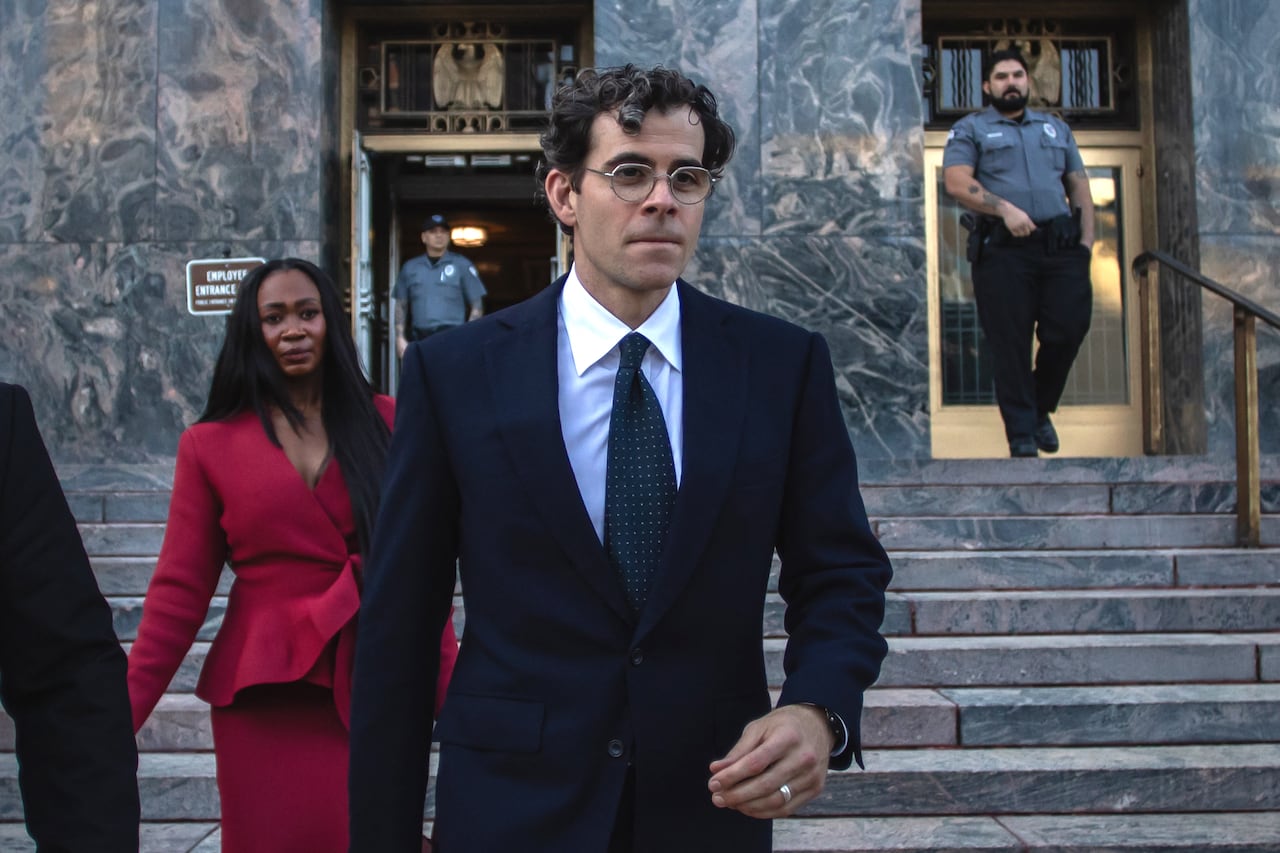
Adam Mosseri, head of Instagram, is shown after testifying at trial in Los Angeles Superior Court on Feb. 9. (Apu Gomes/AFP/Getty Images)
According to public records, Meta was set to contribute $9 million USD towards the $27 million USD the district was to receive, while the owners of Snapchat, TikTok, and YouTube will also provide damages.
Additionally, this year Meta was held liable in a civil trial in Los Angeles Superior Court for 70 percent of the $6 million USD in damages awarded to a young woman who claimed to have developed a social media addiction as a child, which worsened her mental health challenges. The remaining amount was attributed to Alphabet, the parent company of YouTube.
Both Zuckerberg and Mosseri provided testimony during that trial. Zuckerberg stated that the company’s policy prohibits Instagram users under 13, and that they actively work to identify users who misrepresent their ages, while Mosseri expressed disagreement with the notion that individuals can be clinically addicted to social media platforms.
Mosseri stated, “It’s not beneficial for the company, in the long term, to make choices that profit us at the expense of people’s well-being.”
Meta is currently defending itself against allegations in Tennessee, where the state’s attorney general claims that Instagram was intentionally designed to be addictive, and that Zuckerberg was repeatedly informed by certain Meta employees about research indicating negative impacts on teens, but he chose not to support initiatives aimed at mitigating those harms.
Furthermore, Meta is facing legal action in Canada regarding alleged harm to young users from individuals and school boards, among others.
Tag: rewrite-pending

