
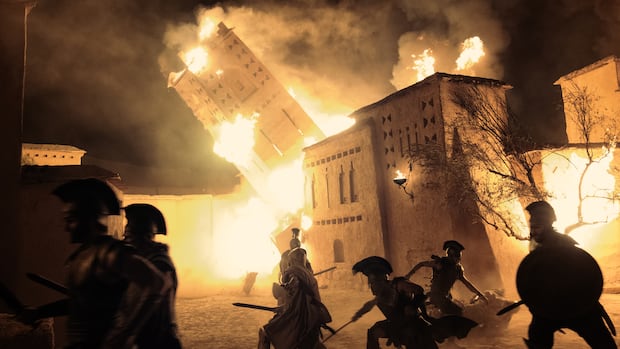
When The Odyssey was written, the Bronze Age palace civilizations that influenced its narrative had long since disappeared, having been absent for centuries.
Palatial structures had crumbled, trade routes had disintegrated, and populations had relocated throughout the eastern Mediterranean. A recent climate study indicates that enduring periods of severe drought contributed to the stresses faced by this collapsing society.
Published in Science Advances, the research examines drought conditions from approximately 1400 to 900 BC, which coincides with the decline of the Mycenaean palace society in Greece and the Hittite state in present-day Turkey.
Previous natural records such as cave formations, lake sediments, and pollen had already provided indications of drought. This new model clarifies how various natural climate phenomena may have converged to exacerbate these conditions, establishing a historical context for the scarcity and turmoil that resonate throughout the fictional landscape of The Odyssey.
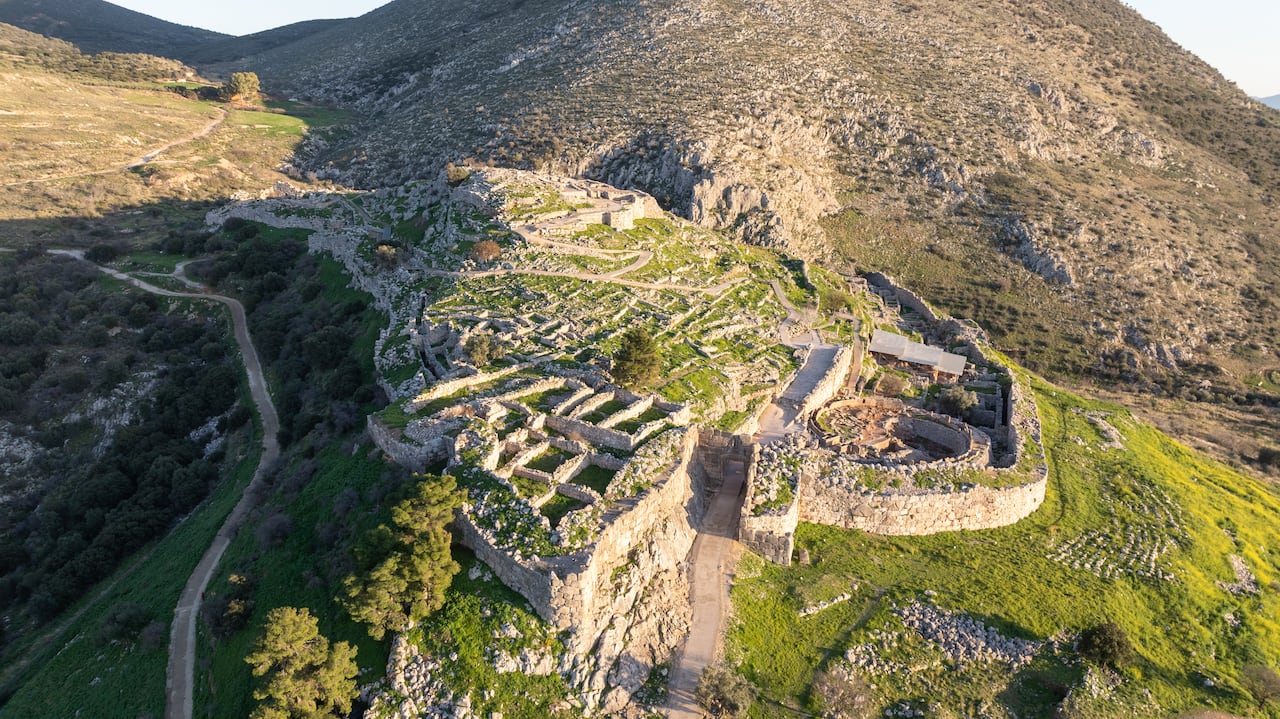
The remnants of Mycenae, a significant palace center of Late Bronze Age Greece. The collapse of Mycenaean palace society began around 1200 BC, destabilized by prolonged drought and other shocks in the eastern Mediterranean. (George Pachantouris/Getty Images)
A gradual drying followed by abrupt shocks
Katherine Power, the lead author of the study and a PhD student in physical geography at Stockholm University, noted that the model revealed a long-term trend towards drier conditions in parts of the eastern Mediterranean. This was later compounded by several short-term climate patterns that intensified drought during the period of the Late Bronze Age collapse.
Power explained that while these shorter droughts might not have been disastrous by themselves, their occurrence atop a long-term drying trend magnified their impacts.
“Everything sort of happened at once, and that was very bad luck for them,” Power remarked.
Power, along with co-author Qiong Zhang, a professor of physical geography at Stockholm University, arrived at this conclusion through a computer model that simulated 8,000 years of climatic changes, including variations in Earth’s orbit, greenhouse gas levels, and the interactions among the atmosphere, oceans, vegetation, and soil moisture.
According to Power, the cumulative effects of these changes could have resulted in shorter rainy seasons, diminished harvests, and strained water supplies, thereby increasing the pressure on already vulnerable societies.
“We never want to claim that climate was the sole factor,” Power stated. “We intend to suggest that climate may have worsened existing issues.”
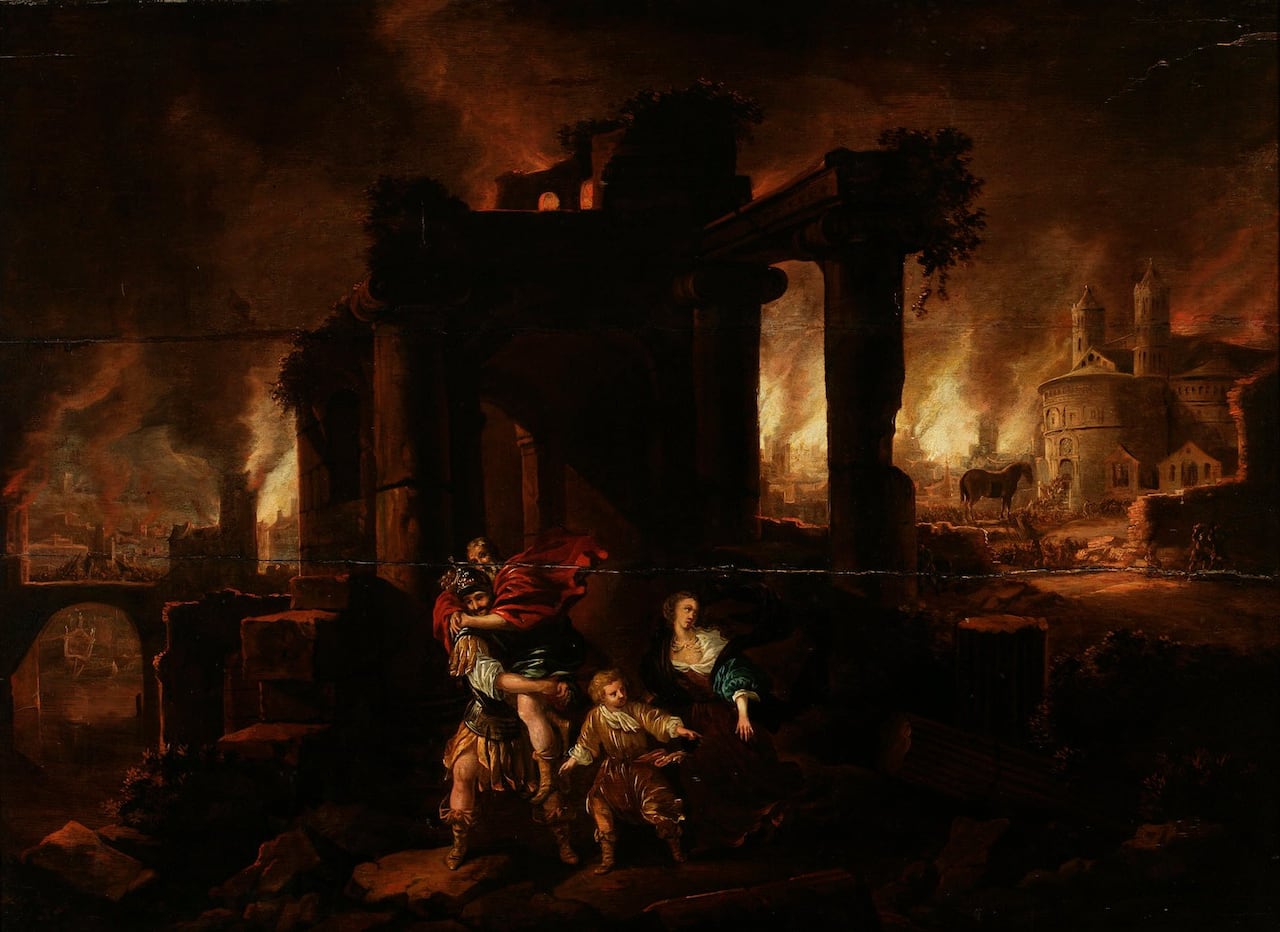
Claes Jansz. van der Willigen’s 17th-century painting The Burning of Troy depicts Aeneas and other refugees fleeing as the legendary city burns. In Virgil’s Aeneid, Aeneas escapes Troy and becomes an ancestor of the Roman people. (Finnish National Gallery)
When interconnected systems fail
Lynn Welton, an assistant professor of Near Eastern Archaeology at the University of Toronto, commended the study for illustrating how climate evolved over time in the region and for placing local evidence within a larger regional context.
During the Late Bronze Age, the eastern Mediterranean was interconnected through trade, diplomacy, and political alliances, which allowed disruptions to propagate when key centers faltered, Welton explained to CBC News from Tell Tayinat, an archaeological site in southern Turkey that contains evidence from the transition between the Bronze and Iron Ages.
“This era is characterized by the disintegration of many international systems that existed during the Late Bronze Age, though the responses of different regions in the following period varied significantly,” Welton noted.
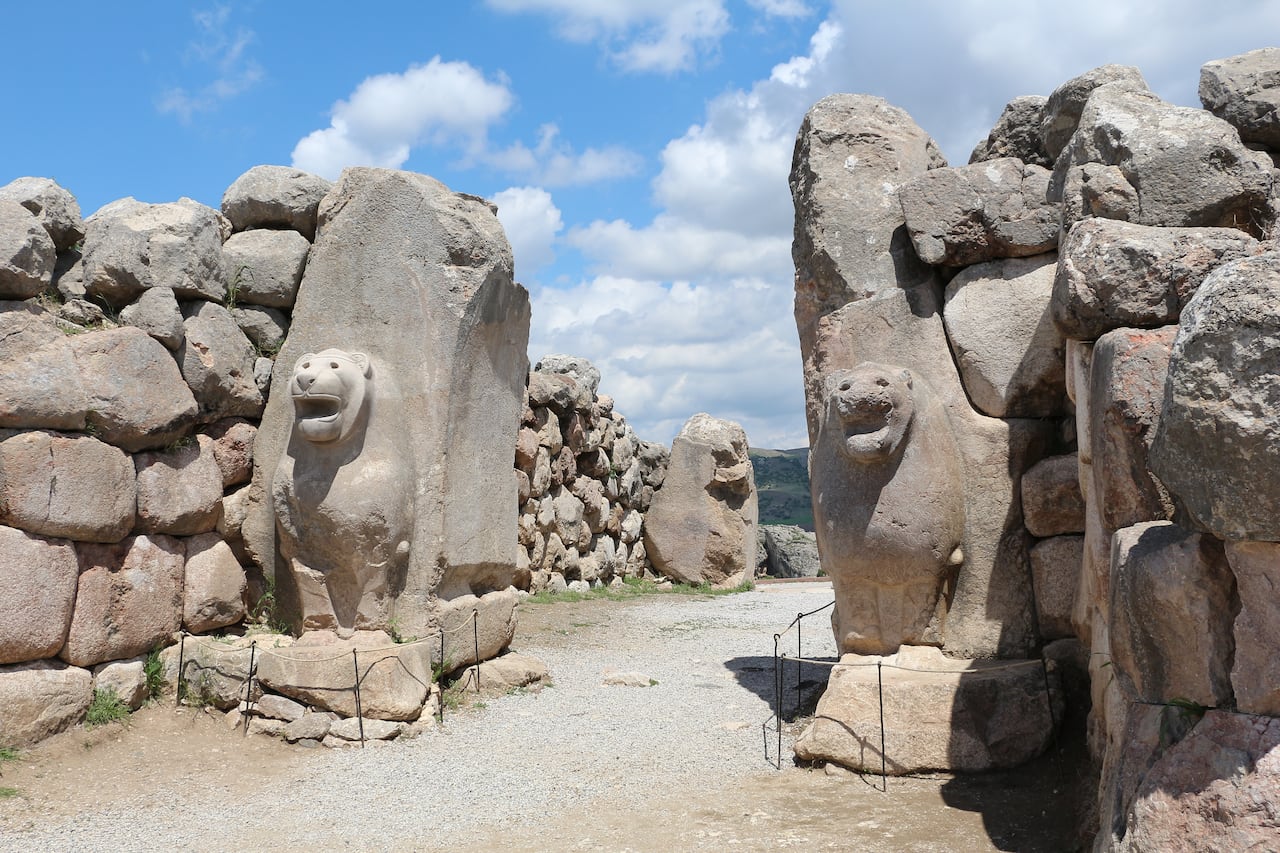
The Lion Gate at Hattusa, the capital of the Hittite Empire in modern-day Turkey. The Hittite state was among the major powers disrupted at the end of the Late Bronze Age. (Bernard Gagnon)
Texts from the period indicate issues such as food shortages and reliance on grain shipments.
“We have some documents that suggest droughts or famines occurred,” Welton said. Other records point to poor harvests and dependence on imported grain.
If multiple regions experienced crop failures simultaneously, she added, trade could not offer the same level of security.
Welton warned that the term “collapse” can sometimes obscure as much as it clarifies. For instance, while the Hittite state came to an end and the Mycenaean palace economy vanished, she emphasized that this does not imply that communities everywhere disappeared. Some urban areas continued with little sign of destruction, she noted, while others exhibit evidence of newcomers, alterations in material culture, and political reorganization.
“Not all regions collapsed simultaneously, at the same pace, or in the same manner,” Welton remarked.
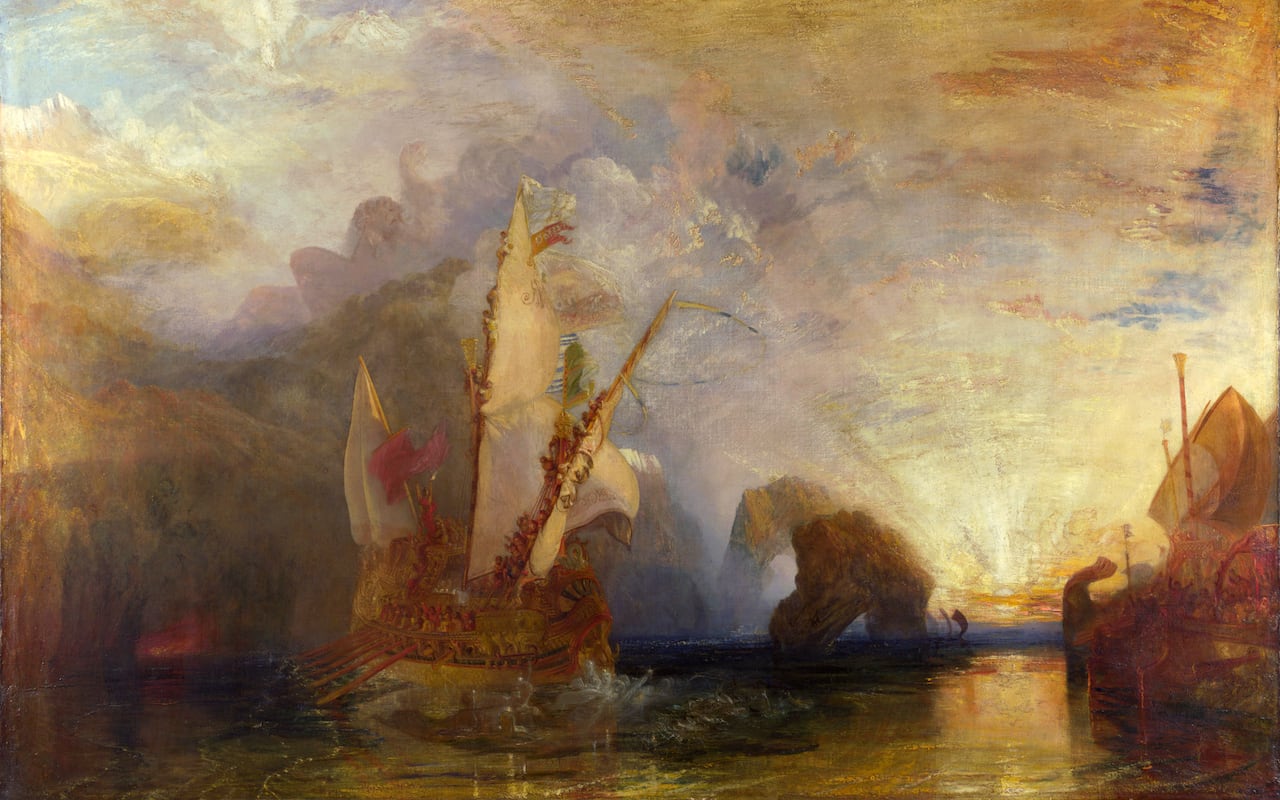
J.M.W. Turner’s 1829 painting Ulysses Deriding Polyphemus depicts Odysseus sailing away after escaping the one-eyed giant who had imprisoned him and his crew when they entered his cave in search of food. (The National Gallery, London)
The imagined era behind the poem
Centuries after the Bronze Age palace societies faded away, The Odyssey envisioned a heroic realm filled with palaces, warriors, vulnerable households, and treacherous journeys. Most scholars agree that the poem should not be interpreted as evidence of a historical drought or migration from the Bronze Age. However, its recurring themes of scarcity, displacement, and social disorder resonate with the pressures experienced in a region shaped by environmental and political turmoil.
Jonathan Burgess, a professor emeritus of classics at the University of Toronto and author of The Travels of Odysseus, asserts that the poem does not preserve a singular historical period.
“It’s just a hodgepodge,” Burgess stated. “The material and cultural elements presented by Homer stem from various time periods.”
A recurring motif in the poem is the impact of food insecurity on the narrative’s progression.
“Hunger plays a significant role,” Burgess explained. The crew often arrives at unfamiliar locations without adequate provisions due to their unplanned wanderings.
“They don’t know where they are. They’re just landing at places here and there.”
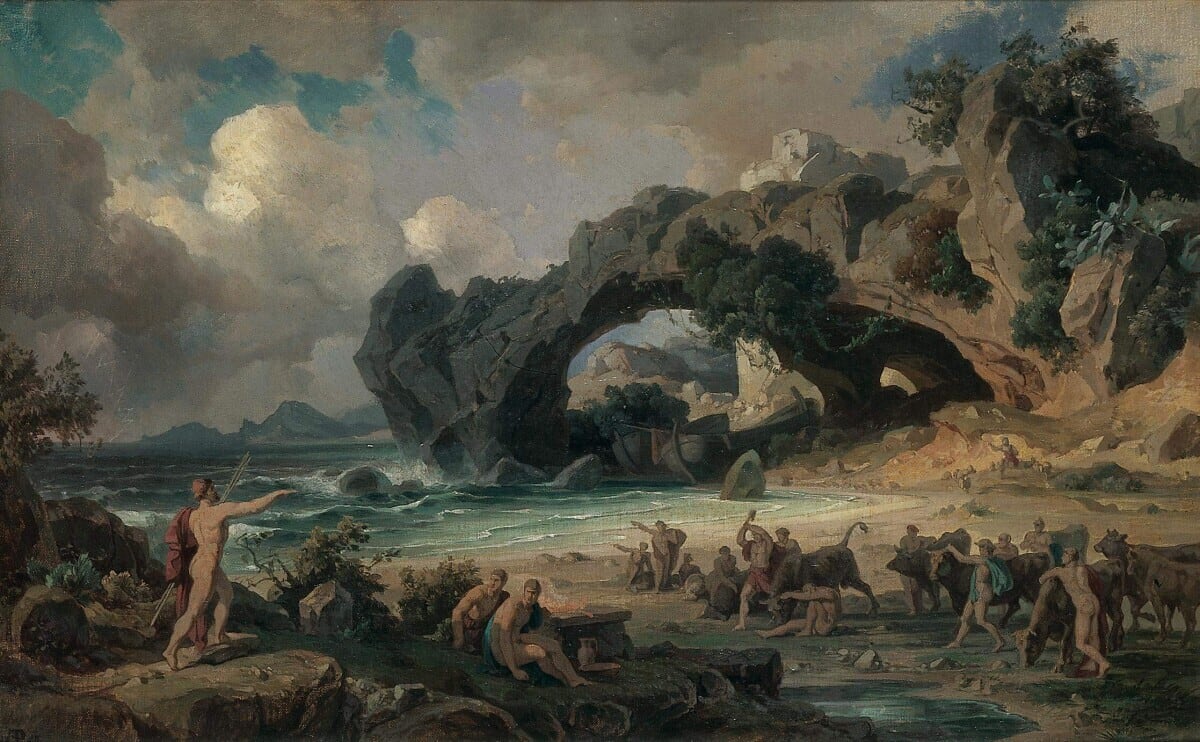
Friedrich Preller’s 1865 painting Ulysses’ Companions Steal the Cattle of Helios depicts hunger driving Odysseus’s crew to kill the sun god’s sacred cattle. (Kunsthalle zu Kiel)
Their quest for sustenance ultimately leads the crew into the Cyclops’s cave. Subsequently, adverse winds trap them on Helios’s island until their provisions dwindle. Faced with starvation, the crew slaughters the sun god’s sacred cattle despite multiple warnings.
“They’d prefer to eat now and face the consequences later than to die from hunger,” Burgess noted.
Scarcity also threatens stability in Ithaca. Cattle symbolize both wealth and sustenance, he pointed out, and the suitors consume Odysseus’s livestock, wine, and stored goods without replenishing them.
“It’s a significant disruption to a small and potentially fragile food economy,” he remarked.

Wanderers and challenging returns
The environmental and political turmoil of this era sharpens one of The Odyssey‘s key themes: a displaced hero striving to return home in a world where access to food, shelter, and community is perpetually uncertain.
“Odysseus is lost much of the time or he’s delayed by circumstances,” Burgess explained. “Homer emphasizes that Odysseus eventually returns home, but he does so alone.”
Odysseus loses his ships and often relies on others for food, shelter, and transportation. Upon finally reaching Ithaca, he discovers his household is occupied, its resources depleted, and his authority contested.
This prolonged struggle, according to Burgess, is central to the emotional impact of the narrative.
“It’s somewhat of a paradox,” he stated. “The tale of traveling and being unable to reach home — being hindered from returning home — creates sympathy for Odysseus.”
In the poem, Odysseus reclaims Ithaca, yet the genuine palace world that inspired it endures only in ruins, fragments, and myth.

