
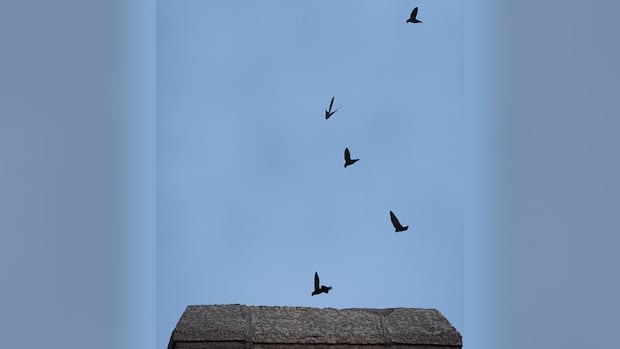
This spring, peculiar metallic chittering sounds began to emerge.
Nettie and Thomas Rempel-Ong started hearing soft, rapid, insect-like chatter.
The source was inside their residence.
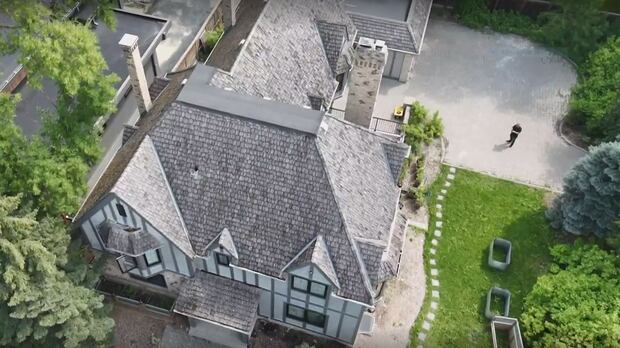
“My wife and I had that moment where we thought, ‘We should probably contact someone about this,’” Rempel-Ong mentioned while standing in his yard, looking up at a four-meter-high brick chimney protruding from his roof.
“We discovered that a threatened species inhabits that chimney.”
The couple had unexpected tenants in their 91-year-old house located in Winnipeg’s Old Tuxedo area — specifically, chimney swifts, a migratory bird species designated as threatened under the federal Species at Risk Act.
At 40 years old, Rempel-Ong is still coming to terms with hosting a threatened species, but he has humorously dubbed these “musical roommates” his “swifties,” which embarrasses his young daughter.
A less cringeworthy, more commonly used name is the “flying cigar,” attributed to the bird’s short, tubular shape and long wings.
According to survey data, chimney swift populations have plummeted by 88 percent since 1970.
The adaptation of a wild bird to depend on an artificial structure that emits smoke and ash can be largely attributed to European settlement, urban development, and deforestation.
Before colonization, chimney swifts in North America nested in ancient leafy trees, often those that were dead or dying, with cavities spacious enough to raise young during the summer.
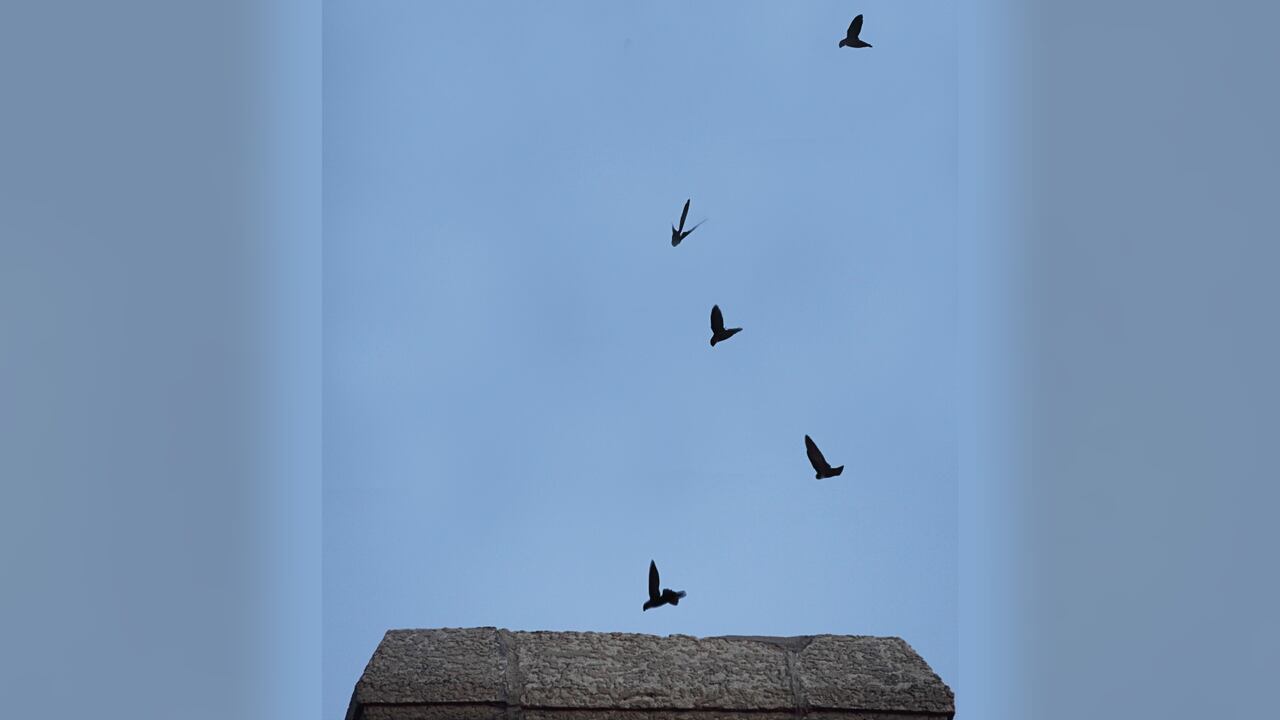
A 2015 image captures chimney swifts diving into a Winnipeg chimney. (Christian Artuso)
They create nests by sticking twigs together with their saliva and attaching them vertically to the inner surfaces of a deep tree cavity.
The clearing of land for agriculture and housing has destroyed much of their traditional habitat.
The birds adapted quite … swiftly.
The inside surfaces of brick chimneys and smokestacks provided many of the characteristics they required for constructing their stick-and-saliva nests.
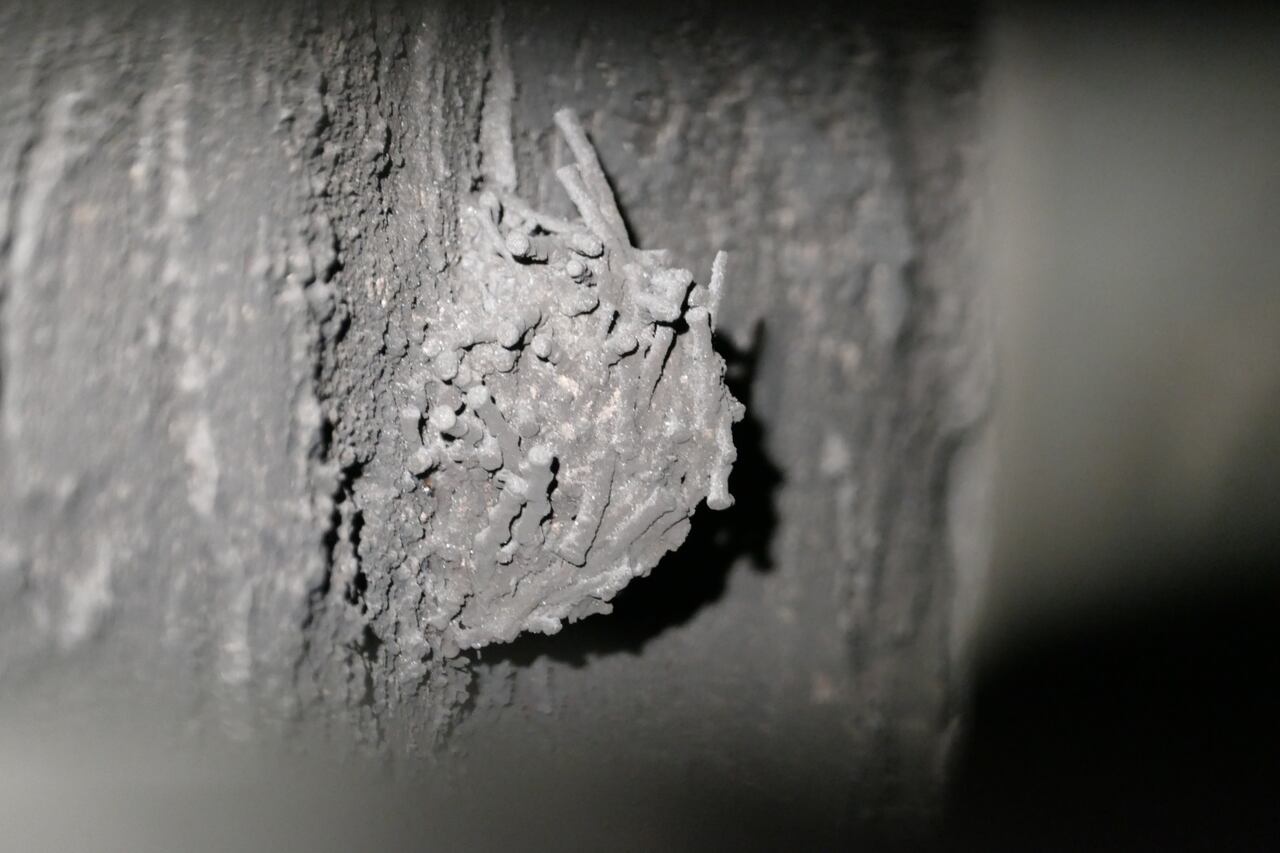
The Manitoba Chimney Swift Initiative confirmed swifts were nesting in the chimney of this River Heights home 2016. (Tyson Koschik/CBC)
At one time, many specialists thought that the arrival of settlers might have increased swift populations in North America due to the sudden rise in available chimneys for nesting.
However, that hypothesis did not hold up.
Subsequent studies indicate that the construction of chimneys across the continent did not occur at the same rate as the extensive old-growth forests were being cut down.
In the last fifty years, the design of chimneys that swifts relied on has fallen out of favor in architecture.

The Rempel-Ongs’ chimney rises about four meters above their Old Tuxedo residence. (Bryce Hoye/CBC)
The closure or dismantling of large church chimneys that once served as communal roosting spots has been detrimental, as has the conversion or capping of residential chimneys in homes like those of the Rempel-Ongs.
Another factor contributing to their declining numbers is the availability of insects.
Chimney swifts belong to the second-most vulnerable group of birds in Canada, known as aerial insectivores. As their name suggests, they consume insects while in flight, including mosquitoes and beetles, the latter of which have seen population declines linked to DDT pesticide usage.
The birds are disappearing at a faster rate in their northern ranges in Canada compared to the U.S., possibly attributed to climate change, as reported by Environment and Climate Change Canada.

Mackenzie Glover, co-ordinator of the Manitoba Chimney Swift Initiative, outside the Rempel Ongs’ home on Tuesday. (Bryce Hoye/CBC)
“Swifts are under considerable pressure from habitat destruction, insect population decline, and climate change,” stated Mackenzie Glover, co-ordinator of the Manitoba Chimney Swift Initiative.
“We aim to protect them as much as possible.”
While the Rempel-Ongs attempted to figure out what was inhabiting their chimney, they stumbled upon the initiative.
Nettie reached out to Glover, an expert in ecological restoration, who had just taken on the role at the swift initiative.
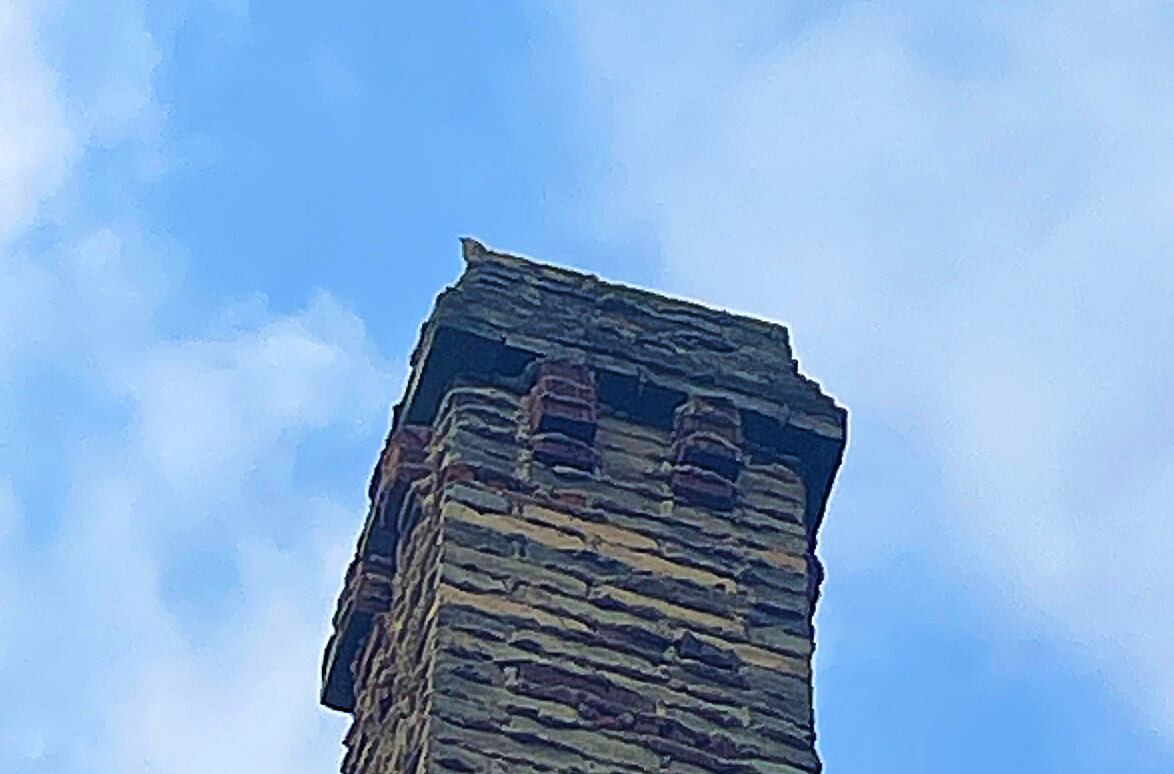
A chimney swift rests on the edge of the chimney towering above the Rempel Ongs’ home on July 22. (Submitted by Thomas Rempel Ong)
She conducted a home visit and observed the Rempel-Ongs’ chimney from her vehicle for one hour.
“I witnessed one dive right in — a very assured entry,” Glover remarked.
This sighting was sufficient to grant protected status to the Rempel-Ong residence under the federal Species at Risk and Migratory Bird Convention acts.
Now entering its 20th year, the Manitoba Chimney Swift Initiative has helped document around 400 potential chimney habitats throughout the province, from The Pas in the north to Emerson at the Canada-U.S. border in the south.
“It’s difficult to keep track of all the chimneys we know they utilize. They’re constantly surprising us by using new chimneys, like this one we weren’t aware of,” Glover explained.
The Manitoba Chimney Swift Initiative’s map of chimney swift locations:
During the autumn, Glover and other members of the initiative conduct chimney cleanouts, often retrieving nesting materials, droppings, and eggshells to determine if swifts were successful in nesting. This information is shared with other researchers responsible for updating recovery strategies periodically.
Homeowners receive financial and other assistance for cleaning, maintaining, or repairing chimneys through the chimney swift initiative.
In accordance with federal regulations, it is illegal to kill, capture, injure, or disturb the birds, or to interfere with their nests or eggs without a permit.
Certain activities, such as chimney cleaning or repairs, can be performed without a permit after the birds have departed for the winter and before their return in spring.
Glover and her team are also assisting the Rempel-Ongs in unsealing and restoring a second chimney on their property, hoping to make it appealing to swifts when they return to roost next year.
“I am optimistic that we are spreading awareness, and that people are becoming interested, and that individuals like Thomas and Nettie are thrilled to have swifts in their chimney,” Glover stated.
“They can consume up to 1,000 mosquitoes daily, so they are quite beneficial to have around.”

Rempel Ong stands outside his home, with one of his chimneys visible in the background (Bryce Hoye/CBC)
Thomas Rempel-Ong appreciates that concept.
“You’re telling me that a fireplace I never use can be a home for a threatened species that naturally consumes mosquitoes daily? This is Winnipeg … just let me know what I need to do, because I am more than willing to have mosquito-eating birds residing in my chimney,” he remarked.
“I guess this is my way of trying to be a good neighbor.”
Listen to the call of the chimney swift:

