
A month ago, Wayne Uhlman from Lunenburg County sought medical attention feeling extremely fatigued. He experienced chills severe enough that his hands trembled, making it impossible for him to grasp a glass.
He was promptly directed to the emergency department, where he was administered intravenous fluids, underwent a blood test, and was prescribed a 21-day course of antibiotics.
It was only after two weeks that Uhlman discovered he had tested positive for anaplasmosis, a tick-related bacterial illness that is becoming more prevalent in Nova Scotia.
“I was genuinely taken aback by that because I knew I hadn’t had a tick on me for more than a couple of hours,” Uhlman remarked.
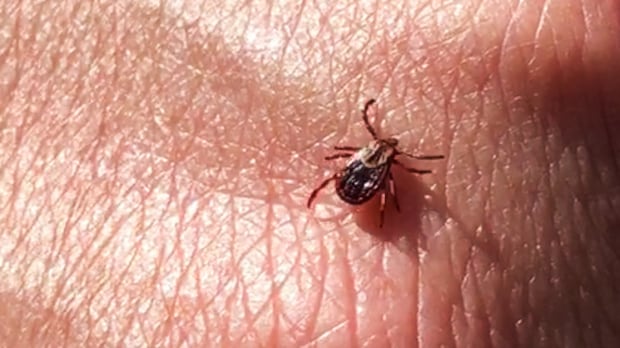
Anaplasmosis is a bacterial disease transmitted through bites from blacklegged ticks (also known as deer ticks) and brown dog ticks, affecting both humans and animals.
As of July 13, Uhlman is among the 245 reported cases of anaplasmosis in Nova Scotia this year, according to the Department of Health and Wellness.
With the rise of tick populations across Canada, likely attributed to extended warm seasons, anaplasmosis has emerged as the second most prevalent tick-borne illness after Lyme disease.
In 2023, Nova Scotia listed anaplasmosis as a notifiable disease, documenting 317 cases, compared to 681 cases in the previous year.
While Uhlman stated that the tick was only on him for a brief duration, that may suffice for infection. A recent clinical study from Emergency Medicine Saint John indicates that ticks can transmit the bacteria responsible for anaplasmosis in as little as four hours.
Flu-like symptoms are typical, but may not always manifest
Anaplasmosis generally leads to flu-like symptoms such as fever, chills, and headaches, which typically resolve without treatment.
However, in some instances, individuals may be unaware of their infection since symptoms do not always present, according to Dr. Glenn Patriquin, a microbiologist and infectious diseases expert at Nova Scotia Health.
This situation leads hospitals to conduct tests for anaplasmosis, even when blood tests are requested solely for Lyme disease.
Unlike Lyme disease, which is characterized by a distinct bull’s-eye rash around the bite area, Patriquin noted that rashes are seldom seen in cases of anaplasmosis.
Doxycycline is a frequently prescribed antibiotic for treating both anaplasmosis and Lyme disease, Patriquin explained. Because lab results take time, physicians often initiate treatment based on symptoms and medical history to expedite recovery.
Patriquin added that anaplasmosis is typically much more acute and that long-term effects are “extremely rare.”
The infection has also seen an uptick in pets, but Patriquin stated there is no evidence to suggest transmission between humans and animals.
-
Nova Scotia woman unable to consume meat or dairy due to suspected tick-bite allergy
-
Surge in guinea fowl sales in N.S. as homeowners seek natural tick control
The Department of Health and Wellness in Nova Scotia states that in rare instances, anaplasmosis can be spread through blood transfusions, organ transplants, or from mother to child during pregnancy.
It also emphasizes that elderly individuals and those with pre-existing health conditions are at significantly higher risk for severe illness after contracting anaplasmosis.
A representative from the department advises that the best prevention against any tick-related diseases is to avoid bites, and people should routinely conduct “tick checks” after being outdoors.

With mild winters in New Brunswick allowing tick populations to expand and migrate northward, tick biologist Vett Lloyd emphasizes the importance of learning how to perform a comprehensive tick check to combat the spread of pathogens.
Uhlman reported that he has completely recovered since his anaplasmosis diagnosis.
He expressed his desire to share his story in hopes of increasing awareness about the disease, which can exhibit a variety of symptoms, including the absence of any symptoms.
“People need to be informed because many assume Lyme disease is the only concern with the classic bull’s-eye rash,” he stated.
“There’s no bull’s-eye with this condition, so if you find a tick on you, it’s wise to be alert if you begin to feel unwell.”
MORE TOP STORIES
-
N.S. woman dials 911 to report a reckless driver; then a Mountie contacts her from inside her residence
-
N.S. dentist criticizes lenient sentence for former employee who embezzled $92K from practice
-
Community puzzled by vandalism of a previously injured historic tree in Halifax Public Gardens
-
Greenwood base shuts down arena following discovery of asbestos in the facility
-
Why Sloan’s bassist is touring Europe with an R.E.M. tribute band led by a Hollywood actor
Tag: rewrite-pending

