
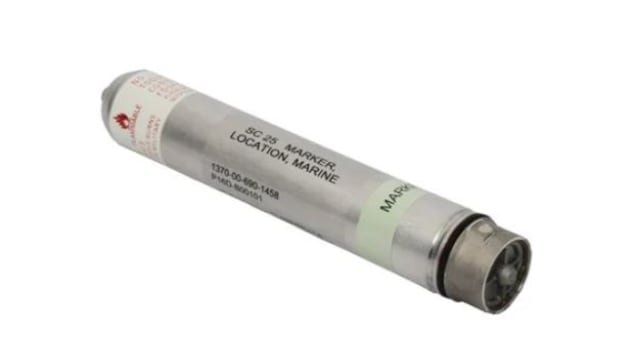
The military is advising the public to report, rather than handle or move, suspected marine location markers and ordnance following discoveries made during a recent beach cleanup in Nova Scotia. Despite appearing old or harmless, these metal tubes can still present a significant danger, as highlighted by 14 Wing Greenwood’s explosive ordnance disposal team in a news release on Monday.
Sgt. Ryan Doyle, the team’s deputy commander, cautioned that these markers can ignite with intense heat and reactivate, reaching temperatures exceeding 800 degrees Celsius. There have been incidents where individuals inadvertently activated the markers by moving or touching them. Doyle emphasized that marine location markers serve specific purposes in search and rescue missions, navigation, and training by emitting smoke, light, or flames to mark positions on the water’s surface.
The military uses red phosphorus in these markers due to its highly visible, long-lasting flame and smoke properties. However, this substance can reignite upon exposure to air, even if the marker appears burnt out or covered in debris. Disrupting the protective coating by moving or transporting the markers can expose the phosphorus to air, leading to unexpected reignition.
In the event of discovering a marker, individuals are advised to maintain a safe distance, take photos, mark the location, and inform local law enforcement without attempting to move or dispose of the item. Scotian Shores, a beach cleanup group in Middleton, N.S., recently found markers in Advocate Harbour, N.S., underscoring the importance of caution when encountering such items.
Angela Riley, the group’s project manager, highlighted the challenges in reporting and disposing of marine location markers, emphasizing the need for direct communication with ordnance disposal teams. While Doyle expressed openness to establishing direct lines of communication, he noted the role of local authorities in coordinating responses to these incidents for better safety measures.
Ensuring the safe handling and disposal of marine location markers is crucial to preventing potential harm and accidents, underscoring the importance of public awareness and adherence to proper reporting procedures.

