
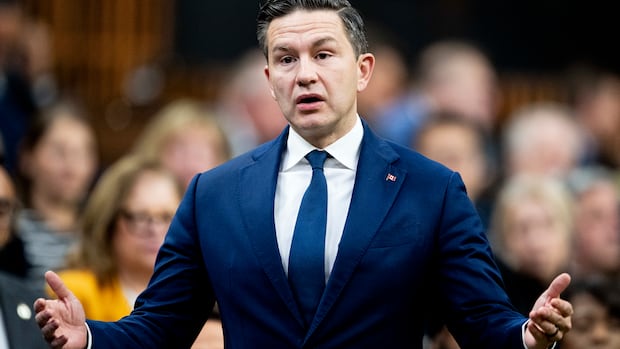
The Conservative and NDP groups are currently deliberating their strategies regarding the forthcoming federal budget, as well as the possibility of provoking an election by rejecting it, according to numerous sources speaking to CBC News.
Key Conservative insiders indicate that the party’s leadership is not keen on an election at this moment; however, they are also not in favor of endorsing the new Liberal government’s inaugural budget due to the potential reputational damage associated with supporting Prime Minister Mark Carney and a policy agenda they largely oppose.
A Conservative insider mentioned that the speculation surrounding the likelihood of the Liberals failing to secure enough votes for the budget is “not fabricated,” as there currently aren’t sufficient votes to ensure its passage in the House once it is presented on Tuesday.
Conservative Leader Pierre Poilievre has outlined several conditions to the Liberals for his party’s support on the budget, such as eliminating the industrial carbon tax and maintaining the deficit below $42 billion. However, expectations for these demands to be met are low, considering the government has indicated they are non-negotiable.
The Bloc Québécois has also laid forth some costly demands, which include higher Old Age Security payments, increased health transfers to provinces, and interest-free loans for first-time homebuyers—initiatives that are unlikely to be fully implemented given the government’s focus on reducing expenses.
Nevertheless, the Liberals have initiated some engagement with the Bloc and on Thursday, they agreed to incorporate at least one of their demands—a crackdown on a tax-evasion scheme that has been long resisted by the trucking industry.
The Conservatives have communicated with both the NDP and the Bloc regarding their voting strategy, according to sources. CBC News has opted not to disclose the identities of these sources as they were not authorized to share information about internal discussions.
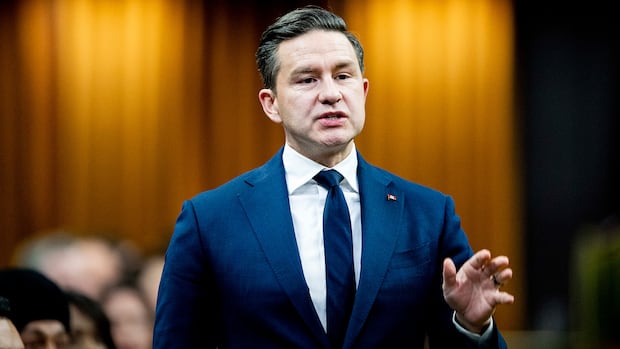
Sources indicate that the Conservative leadership does not wish for an election at this time but is against endorsing the upcoming budget. According to the sources, the most probable outcome is that some of the NDP’s seven MPs may abstain from voting, allowing the budget to pass.
One senior NDP source and two Conservative sources have indicated that it is likely some of the NDP’s seven MPs may choose to abstain from voting, which would enable the budget’s passage.
During the Conservative caucus meeting on Wednesday, MPs were informed that the party’s strategy is to refrain from criticizing the NDP in the immediate future, according to sources relaying information to CBC News.
The Liberal minority government requires three additional votes, or two if the Speaker were to break a tie.
Green Party Leader Elizabeth May stated to CBC News on Thursday that she would oppose any budget containing fossil fuel subsidies, but she is waiting to review the document before making a decision on her vote.
Should the Liberals fail to gather enough support, the government could collapse, and Canadians may face an election before the holiday season.
Sources familiar with the Conservatives’ outreach regarding the budget have stated that the NDP MPs are not unified in their stance, and the caucus operates with limited structure.
A Conservative insider mentioned that the small size of the NDP caucus may result in varied priorities, which could facilitate convincing individual MPs to support the budget.
This scenario could provide the necessary votes to advance the budget through the House of Commons, even without the NDP fully embracing the Liberal agenda.
Meanwhile, Government House leader Steven MacKinnon is publicly appealing to the Conservatives to support the budget to avoid a rapid succession of elections following the last one.
“Walk down the aisle and tell the grinchy leader of the Opposition to vote for the budget. Don’t ruin Christmas. Build Canada strong,” he urged one Conservative MP during question period on Thursday.
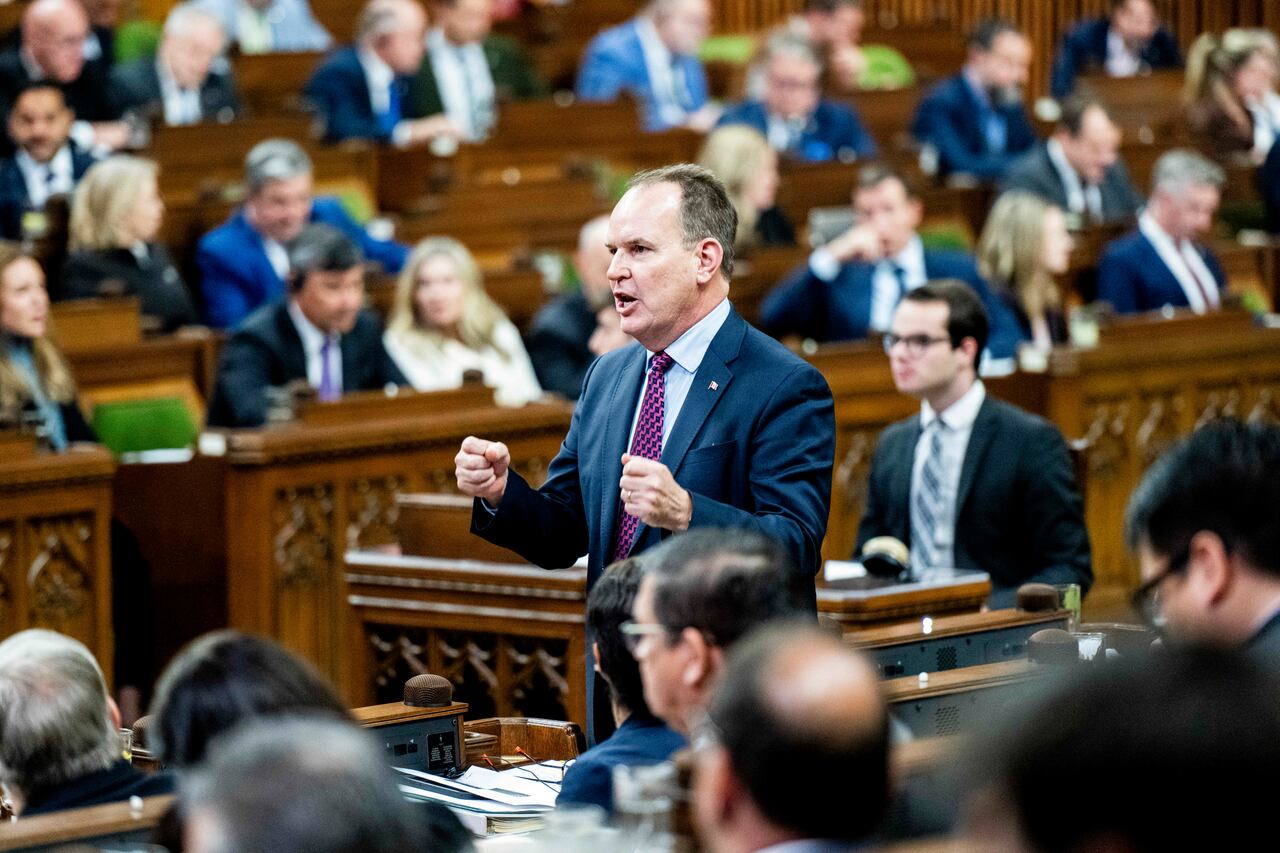
Government House leader Steven MacKinnon urged the Conservative leader not to be ‘grinchy’ and to permit his caucus to support the budget. (Spencer Colby/The Canadian Press)
The NDP finds itself in a financially precarious situation and currently lacks a leader following the party’s disappointing performance in the last election. The NDP experienced its lowest results in a generation after having supported the previous Liberal minority government.
With a leadership election scheduled for March, the party is not well-positioned to conduct another costly national campaign in the near future.
However, the parliamentary caucus has yet to finalize its approach, according to an NDP source.
Two Conservative insiders informed CBC News that during the party’s Wednesday caucus meeting, MPs were advised that they could undertake pre-approved travel during the period when budget votes might occur, but they must be ready to vote electronically.
On Tuesday, Poilievre was asked whether he expects all his MPs to vote in favor of the budget or if some would have the option to abstain. He did not provide a direct answer but reiterated that the Conservatives are seeking an “affordable” budget.
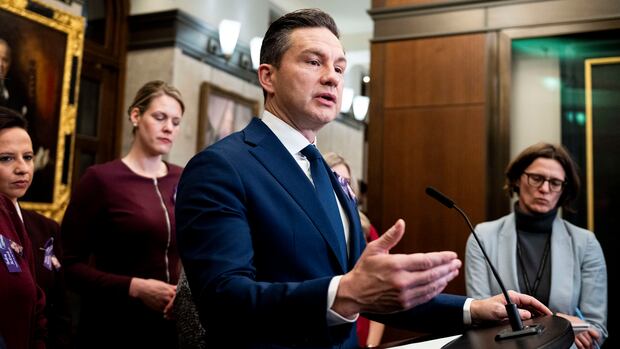
When asked by a reporter if he aims to bring down the government during the upcoming federal budget vote, Conservative Leader Pierre Poilievre stated he is focused on achieving an ‘affordable budget’ and reducing government expenditure.
The Conservatives’ strategy to refrain from criticizing the NDP marks a departure from their approach during the previous Parliament leading up to the spring federal election.
Poilievre was notably harsh in his critiques of former NDP leader Jagmeet Singh and his choice to support former prime minister Justin Trudeau through a confidence-and-supply arrangement.
The Conservatives also ran negative advertisements against the NDP in the months preceding the last federal election—actions that likely decreased party support, benefitting the Liberals in certain districts.
The decision to adopt a softer stance towards the NDP was not communicated during the caucus discussions about the budget, but it reflects the party’s current strategic position, according to a source.
While interim NDP Leader Don Davies has not made specific demands, he has indicated that his party seeks targeted investments to “assist working families burdened by high prices,” “create good jobs,” affordable housing, and funds to “enhance public health care.”
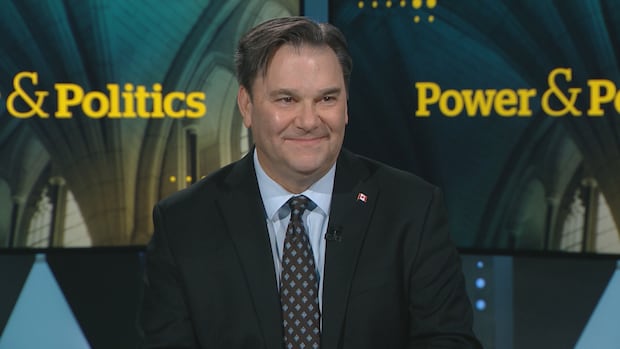
With the Liberals indicating they currently lack the votes to pass their budget scheduled for November 4, interim NDP Leader Don Davies notes the party will wait to see the actual document before deciding on their support, while emphasizing that the Liberals haven’t ‘invited other parties to participate in crafting the budget… thereby risking the chance of securing our backing.’
In a discussion with CBC’s Power & Politics on Tuesday, Davies remarked that “now is the time to invest,” asserting that his party would not endorse a budget that involved significant cuts—cuts that could be anticipated in light of Carney’s commitment to balance the government’s operating budget within three years.
In contrast to the other parties that have essentially ruled out backing the budget, Davies expressed his desire to review the contents of the document before making a definitive decision.
“We cannot endorse an austerity approach,” Davies stated in his interview with host David Cochrane. “We will wait to see what the budget entails.”

