
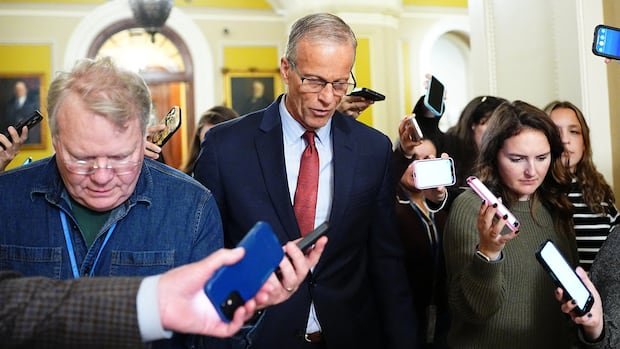
The U.S. Senate initiated steps to resolve the government shutdown by securing a pivotal vote on Sunday. Moderate Democrats advanced compromise legislation to fund the government and consider extending Affordable Care Act tax credits set to expire on January 1. While the vote was 60-40 in favor of moving forward, the final passage could be delayed if Democrats object.
The agreement, facilitated by a group of three former governors turned senators – Jeanne Shaheen and Maggie Hassan of New Hampshire, and Angus King of Maine – ended a six-week deadlock. This breakthrough led to the advancement of bipartisan spending bills and an extension of government funding until late January, in exchange for a mid-December vote on extending health-care tax credits.
The deal also entails reversing the mass layoffs of federal workers since the shutdown began on October 1, ensuring back pay for affected employees. Senate Majority Leader John Thune supported the agreement amid ongoing disruptions in flights, food assistance threats, and federal workers going unpaid.
While some Democrats, including Chuck Schumer, opposed the deal, others such as Tim Kaine and Dick Durbin voted to progress with the agreement. The vote was crucial as it required a delicate balance, with only a few Democrats switching sides to support the initiative.
Republicans collaborated with moderate Democrats to address the widespread repercussions of the shutdown. The agreement aims to fund essential government services and programs until the end of January, with a future vote scheduled to address health-care subsidies. The deal also ensures protection for federal workers and reimburses states for their expenses incurred during the shutdown.
Despite the progress, Democratic pushback is anticipated, with concerns raised about the deal’s adequacy, particularly regarding health-care provisions. House Democrats, including Greg Casar and Angie Craig, have criticized the agreement for lacking concrete measures to reduce health care costs, emphasizing the need for a more robust stance in negotiations.
In summary, the bipartisan efforts in the Senate have paved the way for potential resolution of the government shutdown, although challenges remain in addressing critical issues such as health-care subsidies and federal worker protections.

