
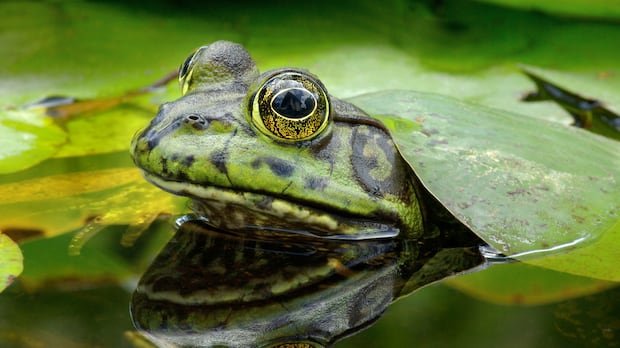
Residents in the Comox Valley on central Vancouver Island are banding together to eliminate invasive American bullfrogs from local lakes and water bodies. The Tsolum River Restoration Society is launching workshops to help people install tadpole traps, as these large bullfrogs are a threat to native species by consuming a variety of prey, including frogs, salamanders, insects, and even small mammals and reptiles.
One resident diligently checks the tadpole traps he set up on Maple Lake every two days to protect the delicate ecosystems. Bruce Moffat, a volunteer with the society, initially took a passive approach when he first encountered bullfrog tadpoles a few years ago. However, upon discovering a significant population of invasive bullfrog tadpoles in Maple Lake last year, Moffat realized the urgent need to intervene to prevent the decimation of other wildlife.
Moffat emphasizes that a thriving population of American bullfrogs can severely impact local amphibians, fish, and insects, which could have cascading effects on birds and larger species. The Invasive Species Council of B.C. warns that the bullfrogs’ voracious appetite poses a threat to endangered species like the northern red-legged frog and the western painted turtle.
Gail Wallin, the executive director of ISCBC, highlights the importance of documenting the impacts of American bullfrogs, noting that while complete eradication may not be feasible, controlling their numbers is essential. Wallin suggests trapping and euthanizing the bullfrogs as a safe method to manage their populations and protect the environment.
The tadpole traps set up by Comox Valley residents are expected to have a short-term effect on local bullfrog populations. Continuous community efforts are necessary to monitor and regulate the bullfrog populations. The Tsolum River Restoration Society is conducting workshops to educate residents on constructing and using tadpole traps to combat the invasive species and safeguard local wildlife.
Katie Gair, the project co-ordinator at the society, explains that the workshops aim to empower community members to utilize tadpole traps in their properties and parks with proper authorization. Gair describes the distinctive features of bullfrog tadpoles, such as their cream-colored bellies and mottled green speckling, and encourages residents to remove these non-native species as part of a comprehensive strategy to protect local biodiversity.

